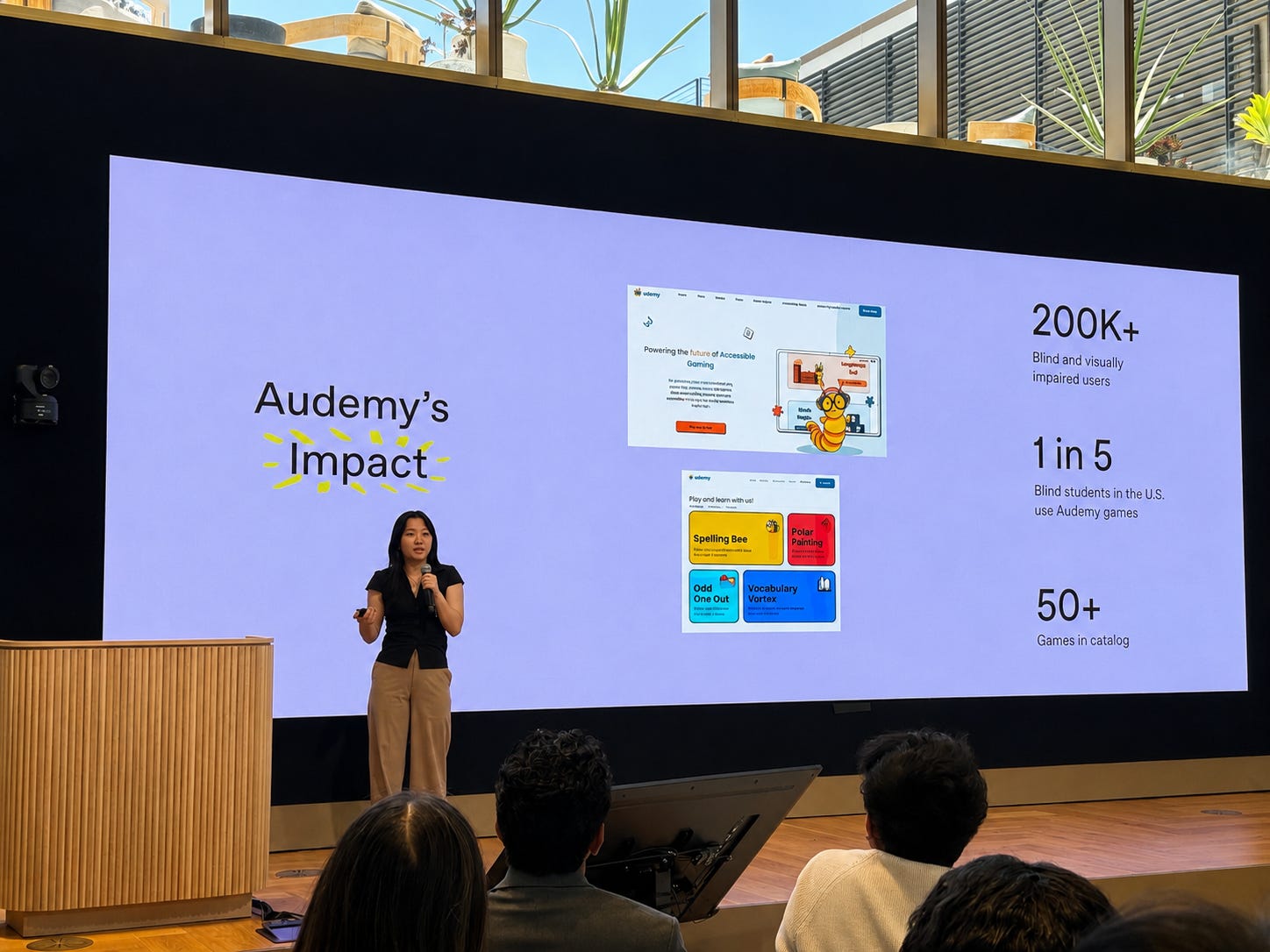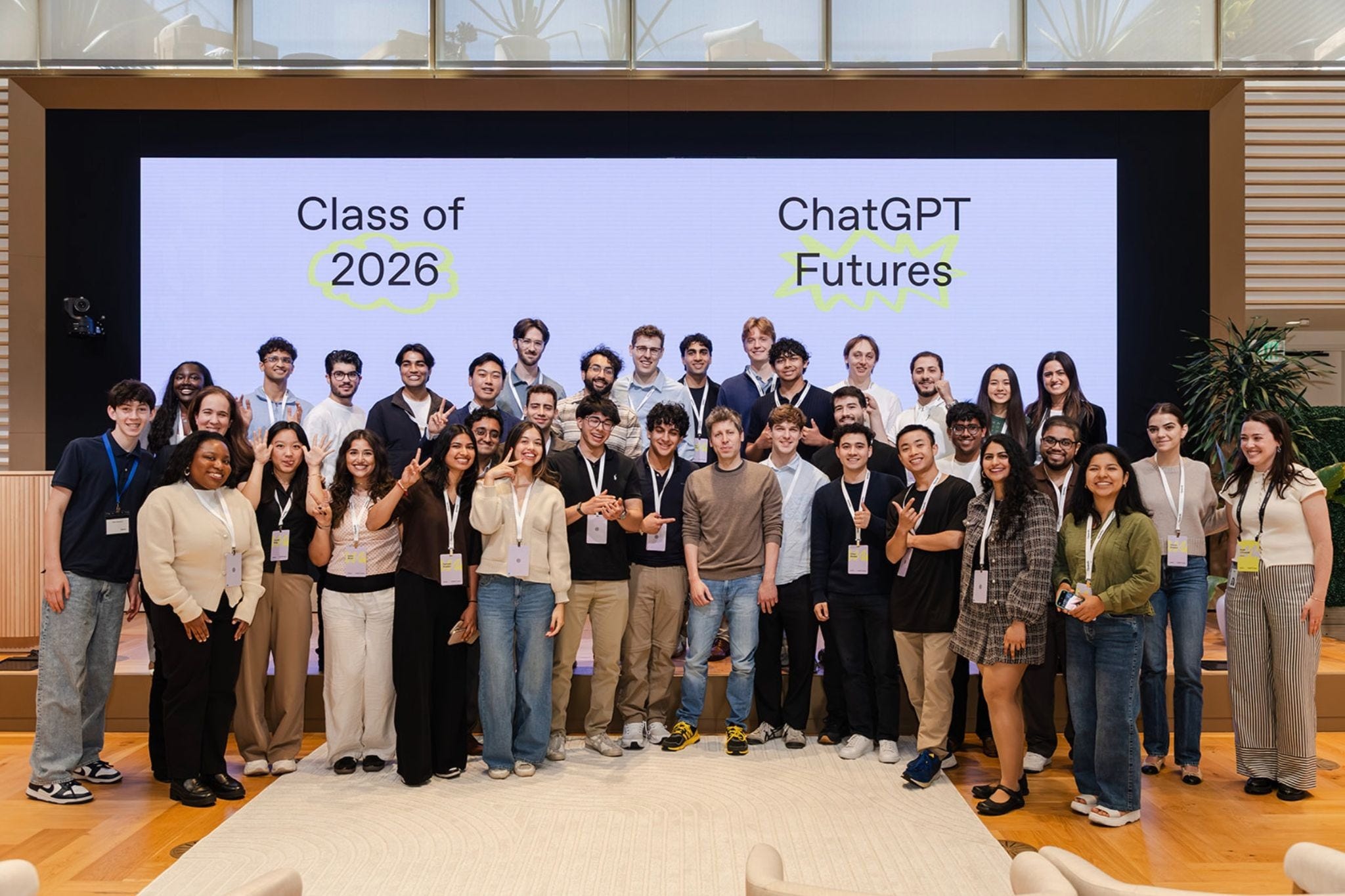
On Friday, we welcomed the inaugural ChatGPT Futures Class of 2026 to our San Francisco headquarters to celebrate what they’ve made possible by putting frontier AI to work.
On behalf of the OpenAI team, I had the privilege of delivering a commencement speech I wanted to share with you. My hope, in the words of Nolan Windam, is that this generation will recognize their place as teachers for a society looking to learn to use the technology of the future.
Congrats to the Class of 2026.
Welcome, ChatGPT Futures Class of 2026.
Over the last year, I’ve met students around the world using AI in remarkable ways.
What struck me wasn’t the technology, but what people like you chose to do with it.
While much of the world was debating what AI might mean someday, you were already putting it into practice.
And that’s why we’re here today.
The Class of 2026 is unique—it is the first graduating class to go through four years of college with ChatGPT.
Commencement speeches will say some version of the same thing: follow your dreams, work hard, be kind, do not fear failure.
All good advice. But, not quite enough for you.
Because you are not graduating into the world you were prepared for. You are graduating into a world where intelligence is suddenly everywhere—answers, drafts, ideas—all on demand.
Many students and recent grads ask me—how can we prepare to be successful in this type of world?
The better question is: what kind of person becomes more valuable when everyone has access to intelligence?
I think the answer is: a person with agency, just like the people sitting in this room.
You all know what it means to have agency because you’ve already demonstrated it.
You did not wait until someone gave you permission, a title, a perfect plan, or a guaranteed path. you just got started.
What’s even more special is the problems you chose to take on in the world:
Rerouting food waste away from landfills.
Helping your peers find scholarships.
Driving access to education.
—the human stuff.
And that’s why I’m optimistic.
Because when I look at this room, I don’t just see what AI can do. I see what people can do when they have access to tools that expand their ability to drive impact.
We brought you together today not just in celebration, but because we believe something bigger is possible when people like you find one another.
Last night at dinner I asked the honorees: What would it take to build a movement of high-agency young people who feel as empowered by this technology?
I’ve been thinking about that question a lot lately because I want my own children to feel the way many of you do.
In fact, my son is here with us today.
He sees the same headlines everyone else sees. He hears the same fears and uncertainty about what AI might mean for his future.
And when I look at him, I find myself wondering: How do we help more young people move from fear to possibility? From consuming technology to creating with it? From watching change happen to helping shape it?
I don’t know the full answer yet.
Movements are these mystical creatures but we do know that they spread.
They spread when someone sits down with a friend, a classmate, a colleague, or a family member and shows them what’s possible.
They spread when we share what we’ve learned.
They spread when we help someone take their first step.
So my ask of you is simple: Keep building. But don’t stop there.
Tell your stories. Share your experiments. Show people what’s possible.
Help others discover the same sense of agency that brought you here.
Because the future of AI won’t just be shaped by the people who build the technology.
It will be shaped by those who use it to solve real problems and inspire others to do the same.
Congratulations ChatGPT Futures Class of 2026.