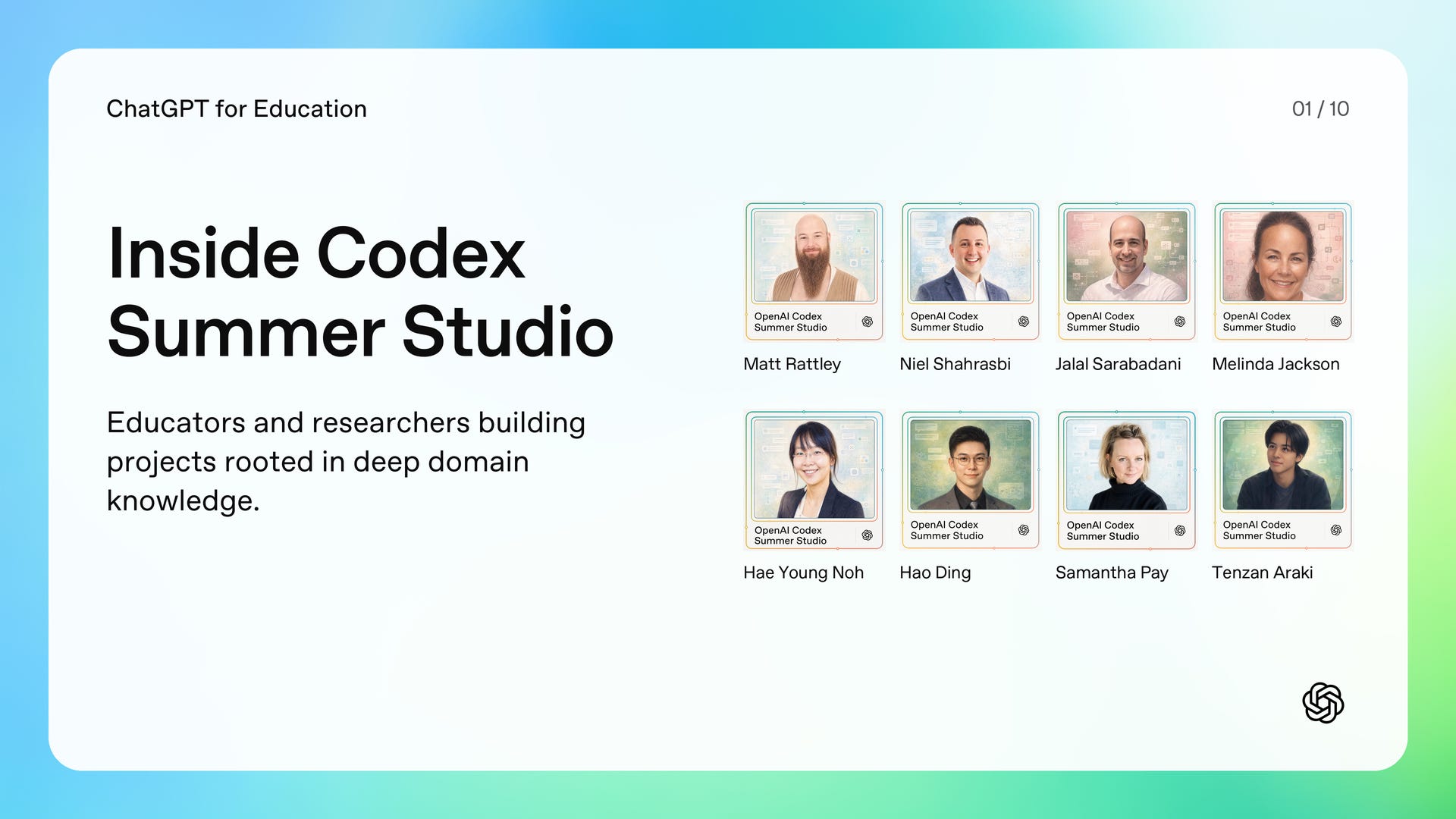
This summer, OpenAI launched the Codex Summer Studio for Faculty and Researchers—a four-week virtual working series designed to unlock a fundamental shift in how higher education uses AI. Most educators already rely on chat to brainstorm, draft, or refine text. But the true leap forward happens when we move beyond quick Q&A to delegate substantial, complex work to AI: assembling interactive prototypes, navigating unfamiliar codebases, automating lab workflows, and organizing messy datasets. In this agentic model, AI handles the heavy technical lift, empowering faculty to lead, direct, and innovate.
We structured the four-week Studio to bridge this gap: starting with workflow essentials like navigating repositories, moving into goal-oriented tracks, building functional artifacts by week three, and finishing with sustainable, reusable tool integrations.
“Faculty brought incredibly specific, lived challenges: a key concept students struggled to visualize, a dataset that took weeks to clean, a routine administrative task that consumed every Monday morning,” noted Siya Raj Purohit, Head of Applied AI Programs, EDU at OpenAI. “The Studio gave them dedicated space and partnership to turn those everyday pain points into working solutions ready to test before the fall semester.”
What Faculty Built
Participants grounded their projects in domain knowledge they already understood deeply. The resulting prototypes were focused, highly practical, and ready for immediate testing in classrooms and labs.
At the University of Oxford, Matt Rattley teaches first-year biochemistry. One of the most challenging topics in his course is helping students visualize how atoms move and position themselves in three-dimensional protein structures. Static slides and textbook diagrams flatten the structures, while physical molecular models quickly grow unwieldy as molecules scale.
Using Codex, Matt designed a peptide geometry explorer featuring three synchronized views: a rotatable 3D molecular model, a view aligned along a chemical bond that students can manipulate, and a dynamic Ramachandran plot mapping those angles directly to protein structures. While setting up individual 3D viewers was simple, the real triumph was ensuring synchronization so that all three perspectives update simultaneously across shared angle data. Matt will integrate the explorer directly into his LMS this year.
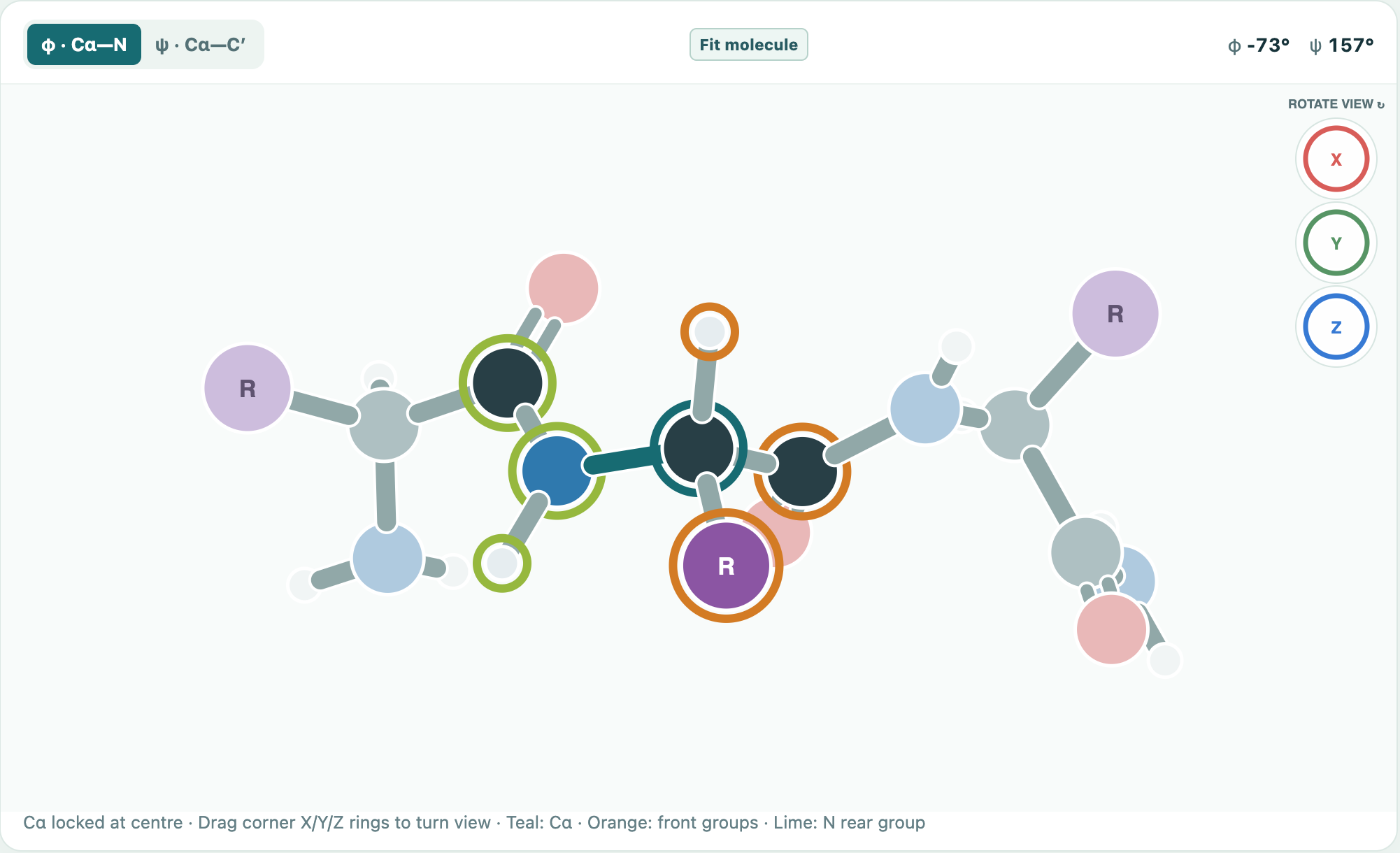
When Matt shared the interactive prototype with recent course alumni, their feedback was immediate: having access to the tool during the term would have significantly deepened their understanding. Reflecting on the build, Matt noted that with beginner-level programming skills, creating a multi-view interactive tool like this on his own would have been nearly impossible without Codex.
Teaching & Learning: Making the Process Visible
At San Francisco State University, Niel Shahrasbi developed a self-guided project for asynchronous MBA students with non-technical backgrounds. Working with real-world financial data, students build an interactive dashboard, author an executive summary, create reusable AI prompts, and present a short video walkthrough. Beyond the technical build, the assignment prompts students to critique raw data, verify calculations, question biased rankings, separate factual evidence from assumptions, and reflect on what both they and the AI might have overlooked.
Niel’s key insight was shifting evaluation away from final answers toward assessing learning as an active process: how students frame challenges, test assumptions, identify analytical risks, and iteratively refine their work over time.
At San José State University, Jalal Sarabadani created TeamWeaver, an intelligent assistant that helps form student groups and suggest project roles. Initial prototypes focused primarily on automated grouping, but iterative testing refined the approach. Jalal discovered that evaluating schedule availability, commitment, complementary skills, collaboration styles, and role coverage was far more impactful than relying on rigid personality categories. He also realized that simply optimizing for a high overall class average could still leave individual teams severely unbalanced.
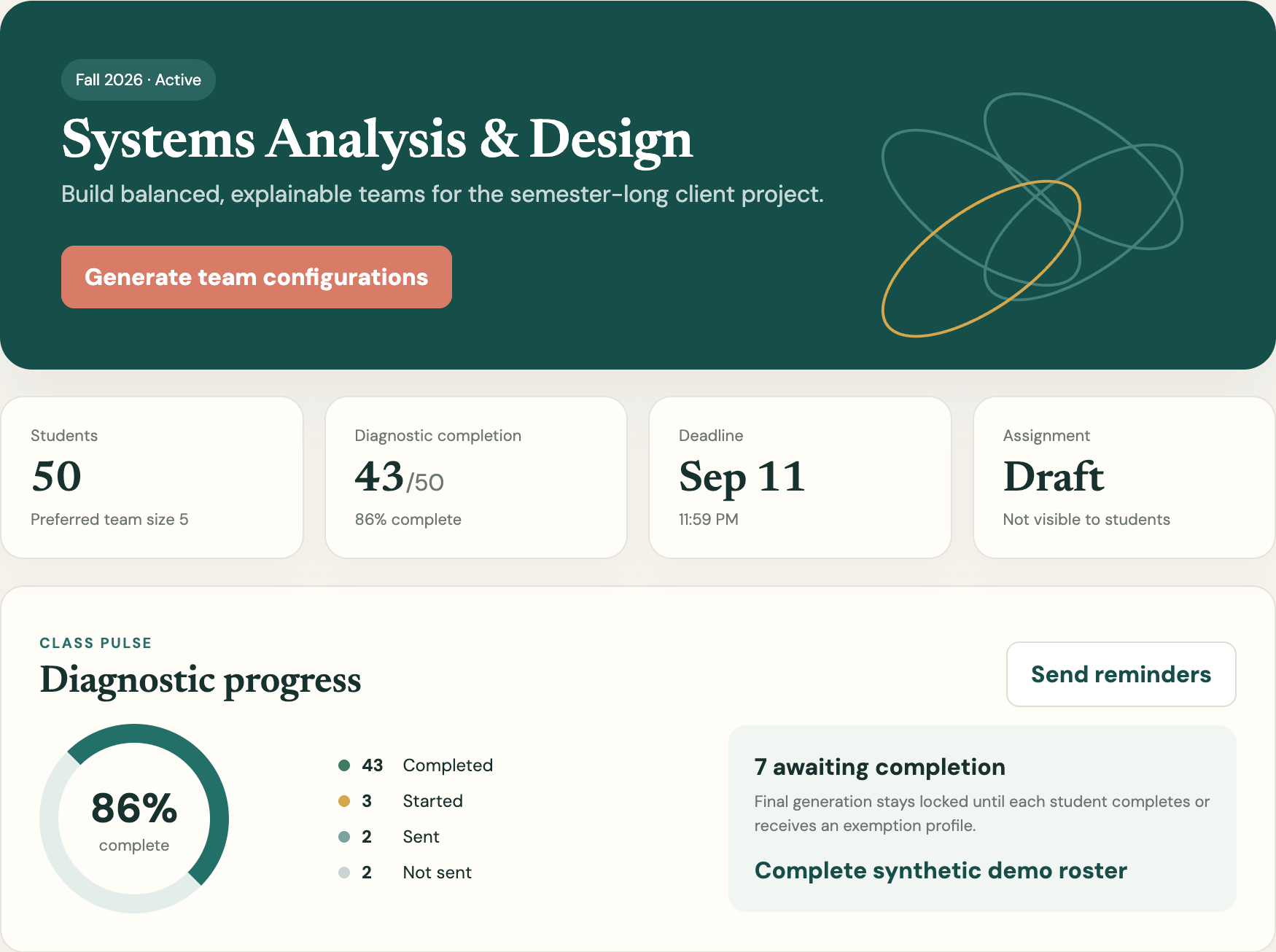
Today, TeamWeaver prioritizes strengthening the most vulnerable team first, provides clear rationale and trade-offs behind every group recommendation, offers alternative arrangements, and leaves final composition decisions entirely to the instructor.
Melinda Jackson, a Spanish lecturer at California State University, Chico, built an interactive Spanish 101 preparation platform for Integrated Performance Assessments (IPA). The site provides practice modules across interpretive, interpersonal, and presentational communication skills without giving away actual exam answers.
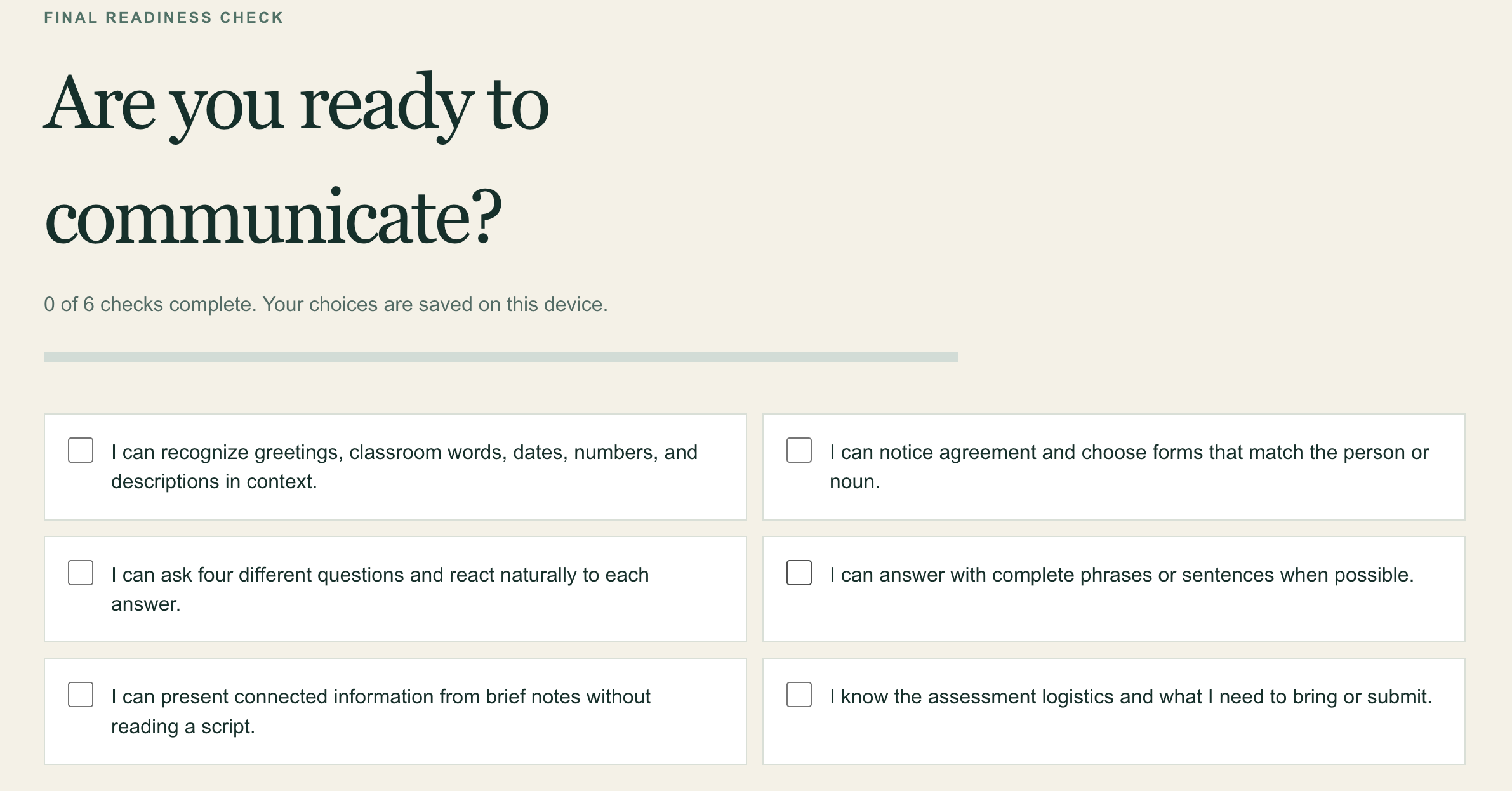
Early user feedback showed that students wanted immediate validation of their reading comprehension. Melinda collaborated with Codex to incorporate optional formative feedback directly into practice passages while keeping formal evaluation content secure. With the initial module proven, she plans to expand this resource model across her open educational resource (OER) curriculum.
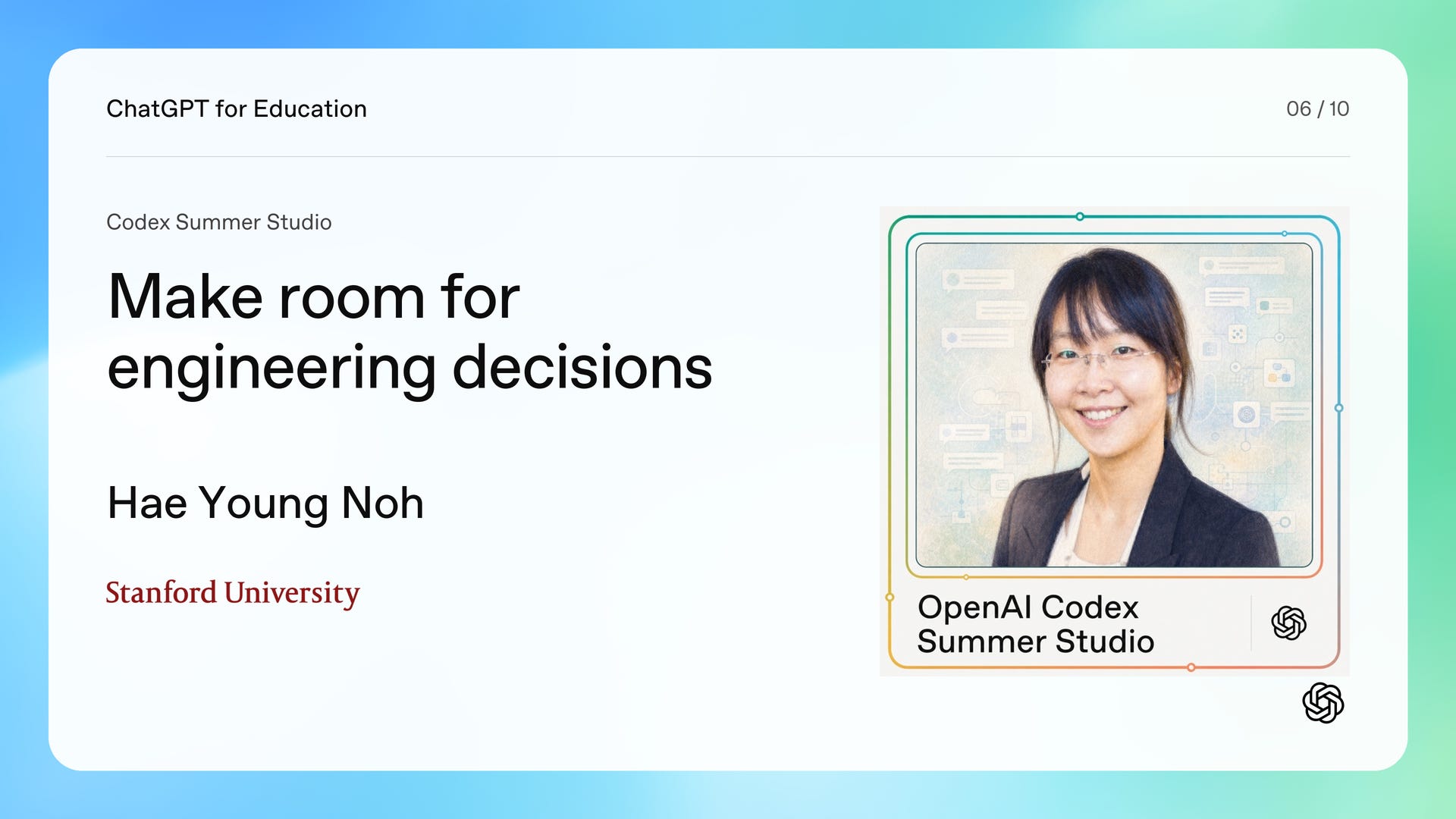
At Stanford University, Hae Young Noh developed a hands-on introductory activity pairing physical circuits, Arduino boards, and motion sensors. Codex assisted throughout the setup process—streamlining installation, compilation, real-time visualization, and sensor recalibration. By lowering technical hurdles, Hae Young enables students to focus on high-level engineering decisions, experimental design, and data validation rather than getting stuck on syntax errors.
Research & Analysis: Accelerating Workflows with Verification
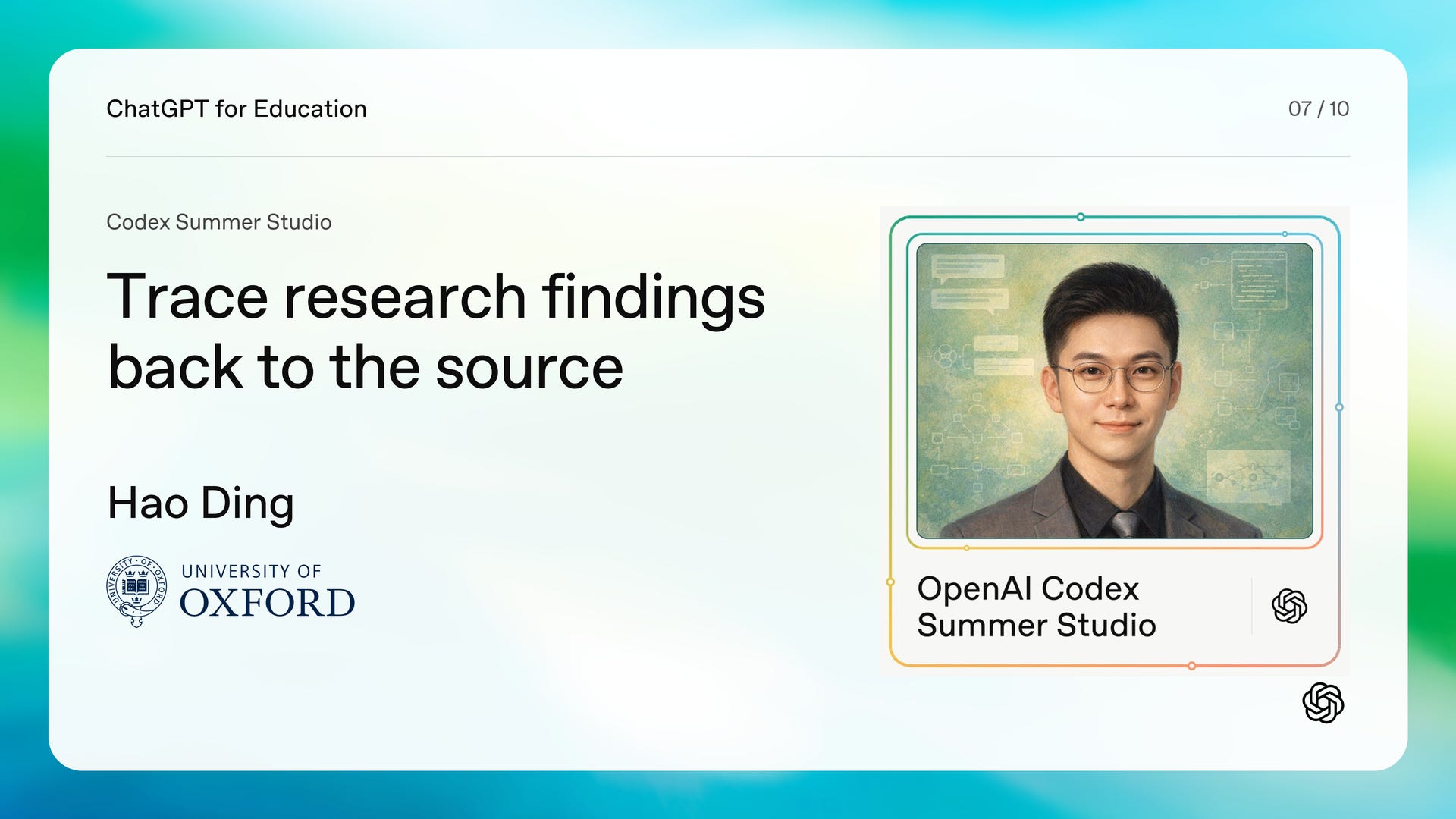
Hao Ding, a researcher at the Oxford-Man Institute of Quantitative Finance, created the ABL Facility Registry—a public open dataset detailing asset-based lending facilities extracted from SEC filings.
Extracting this data poses significant information-retrieval challenges, as critical financial terms are buried across complex SEC exhibits where standard keyword searches fall short. Hao’s automated pipeline screened 203,748 SEC EDGAR documents, routed 34,023 candidate filings to an extraction agent, and published 6,946 credit facilities across 4,223 corporate borrowers. Out of 199,137 published financial quotations, 198,555 (99.7%) were precisely mapped and verified back to their exact locations in source filings.
While the scale is impressive, the embedded verification checks are the real highlight. Hao versioned the extraction logic in GitHub, stamped unique hashes on every dataset record, tracked prompt modifications like code commits, ran same-document consistency checks, and continuously evaluated batch accuracy.
In a candid reflection, Hao shared a moment where an interrupted script silently discarded changes, leading him to briefly report a fix that hadn’t actually applied. That experience reinforced a core principle for AI-assisted research: always verify execution outputs before reporting findings.
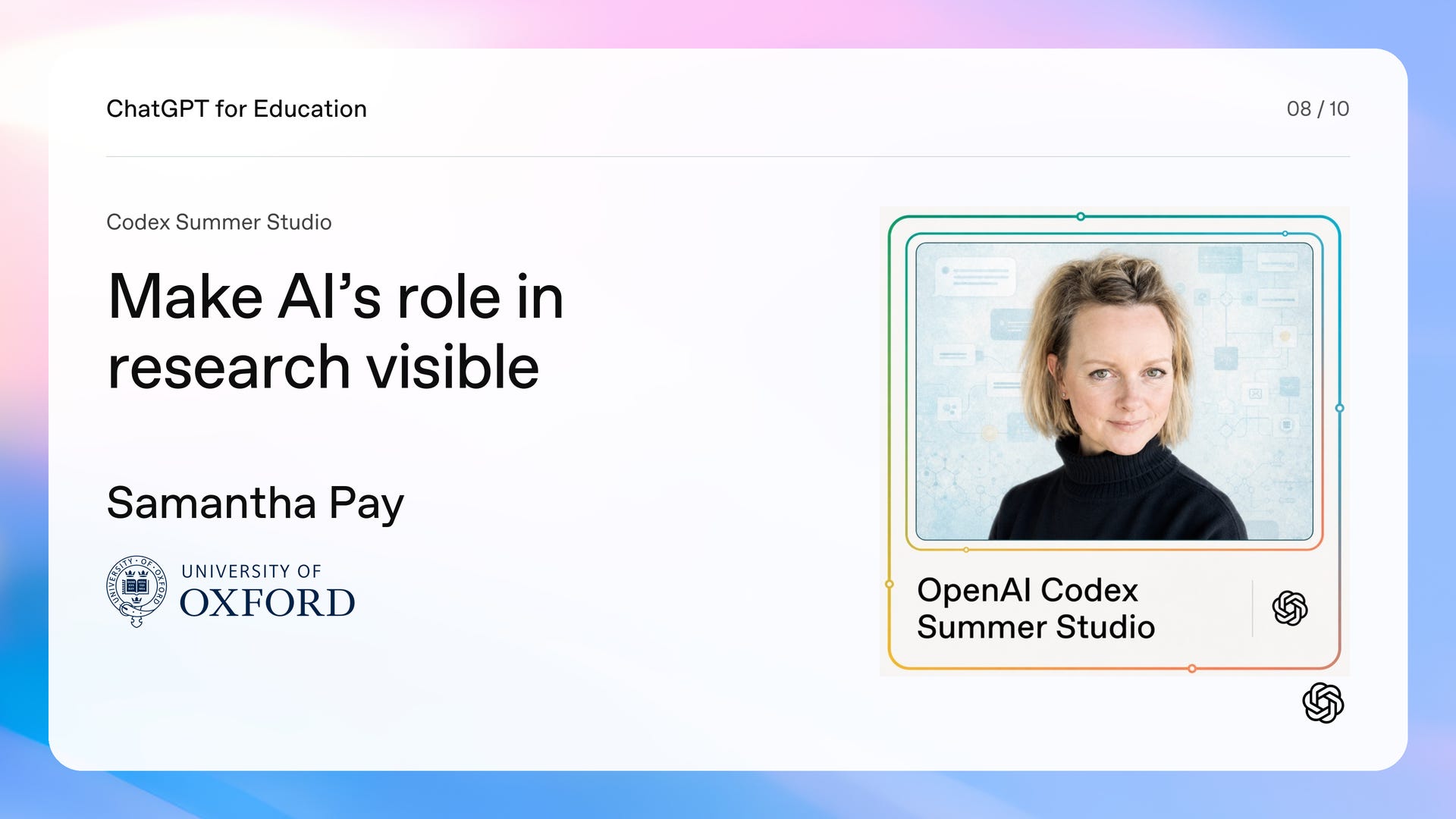
Samantha Pay, a DPhil candidate at the Oxford Internet Institute, designed the Hermeneutic Algorithm Audit—a methodological framework for scholars integrating AI into qualitative and hermeneutic phenomenological research. The tool makes the role of AI transparent and open to scholarly critique without reducing qualitative analysis to a passive log. Samantha described the build as a collaborative partnership where human judgment consistently directs the analytical process.
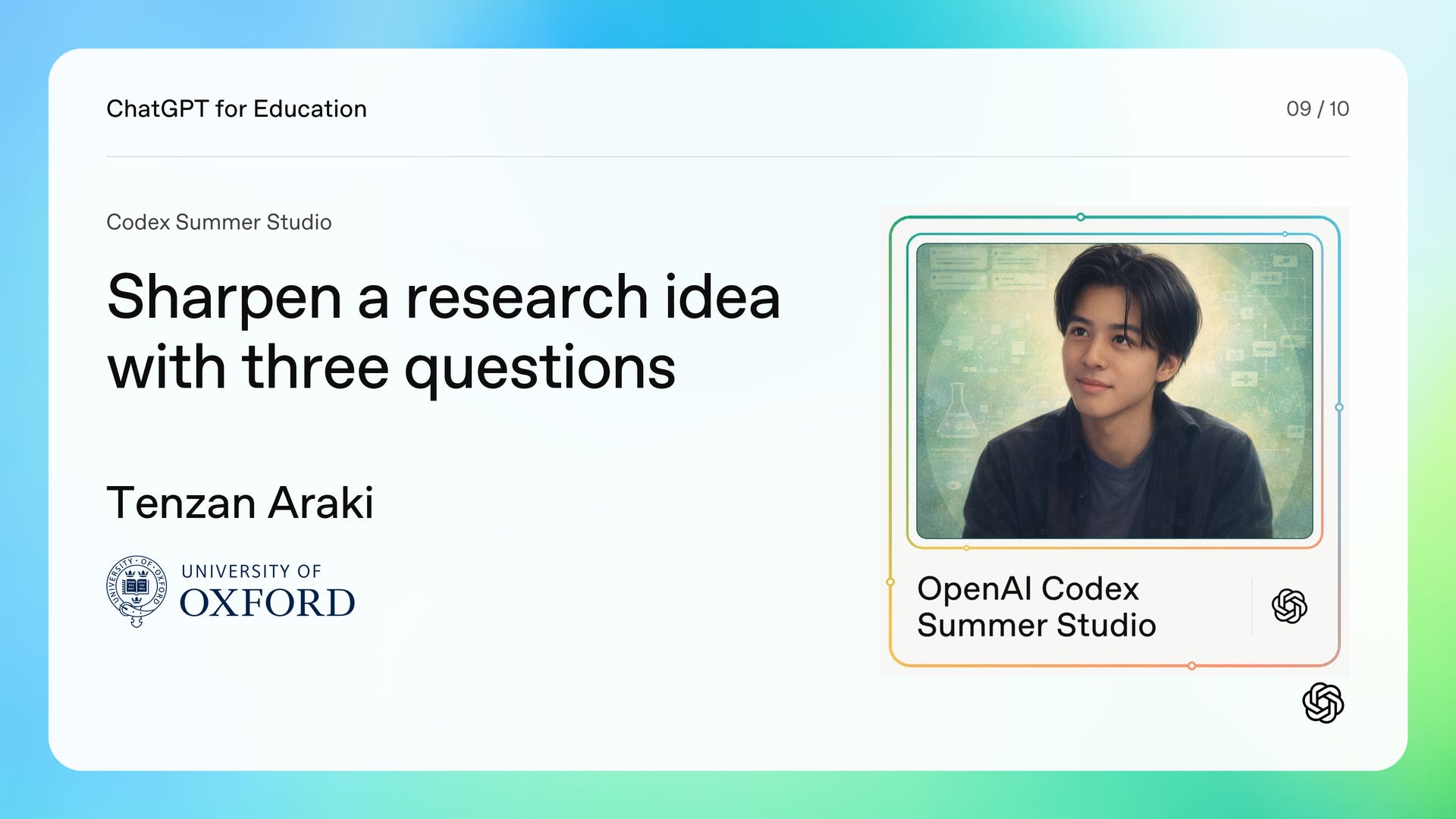
Tenzan Araki, a physics researcher at Oxford, used Codex to stress-test a novel research idea in fault-tolerant quantum computing. Before generating a summary, Tenzan instructed Codex to ask him three clarifying questions about his hypotheses. Answering those targeted questions sharpened his research scope and produced a significantly stronger, more rigorous assessment.
Looking Ahead: Key Takeaways for Higher Education
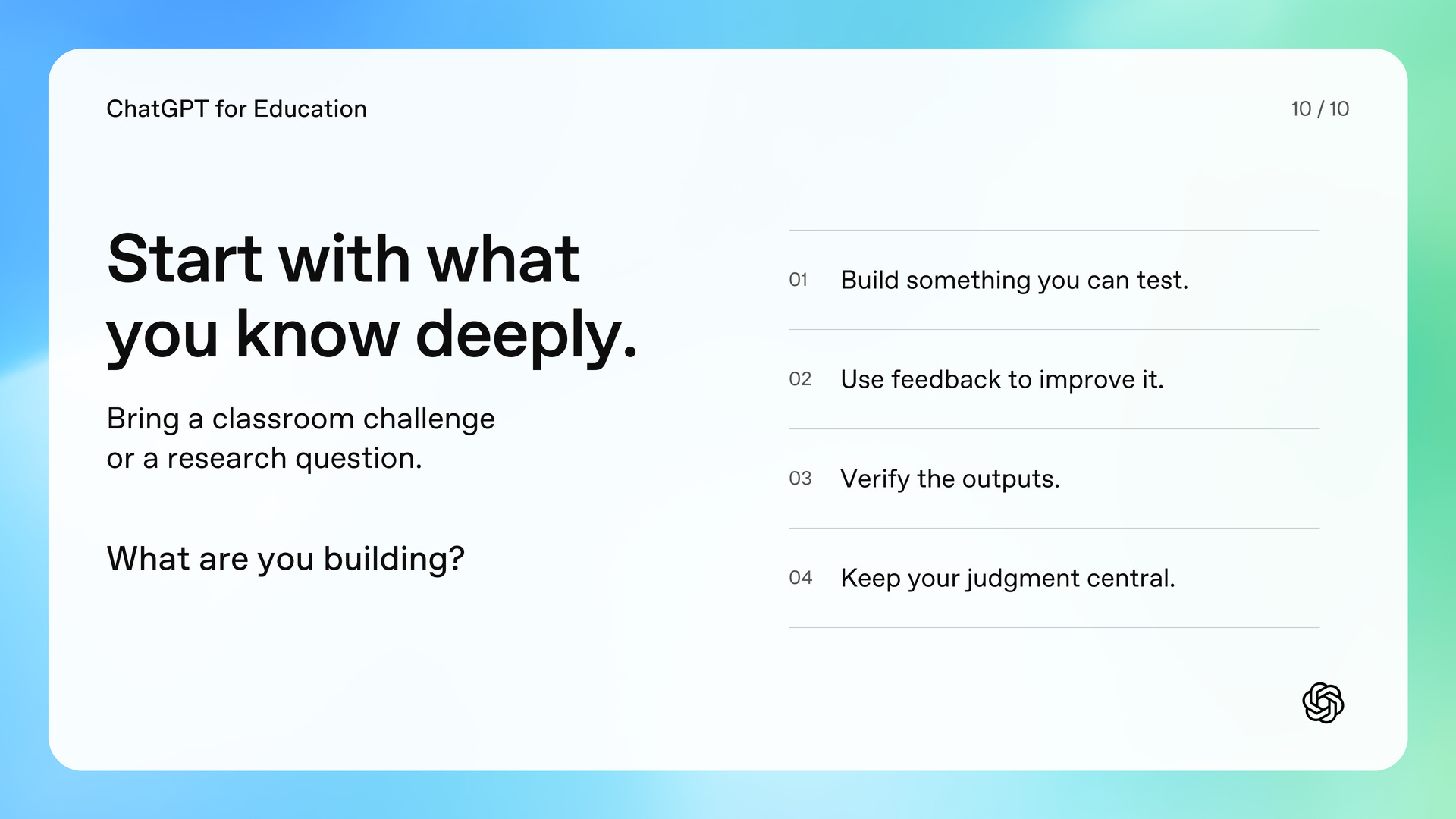
The projects created during the Studio were as diverse as the disciplines represented—spanning interactive simulations, course websites, data pipelines, team optimization tools, and workflow automations. Yet, all shared a common working philosophy: focus on a real problem, ground the AI in domain materials, build small reviewable iterations, and refine based on authentic feedback.
This approach offers valuable lessons for student engagement. As AI tools make generating polished final artifacts easier, educators can pivot toward evaluating the learning journey itself: how students frame problems, select reliable sources, prompt systems, verify outputs, debug errors, and iterate across versions. Niel’s MBA assignments make this inquiry process explicit. Jalal’s TeamWeaver keeps human expertise central to consequential team decisions. Melinda’s Spanish site offers formative practice while safeguarding evaluation integrity.
The same principles apply to research and institutional operations. Research pipelines require transparent data provenance, clear methodology, and explicit verification. Administrative workflows require defined roles, clear boundaries, data privacy, and human approval before execution.
The Codex Summer Studio provided faculty with a structured sandbox to practice these skills on projects they know deeply. As these tools deploy across classrooms and research labs this academic year, our core measure of success remains straightforward: Do these technologies help students learn more deeply, assist researchers in verifying truth faster, and give faculty more time to focus on decisions that truly require human judgment?