
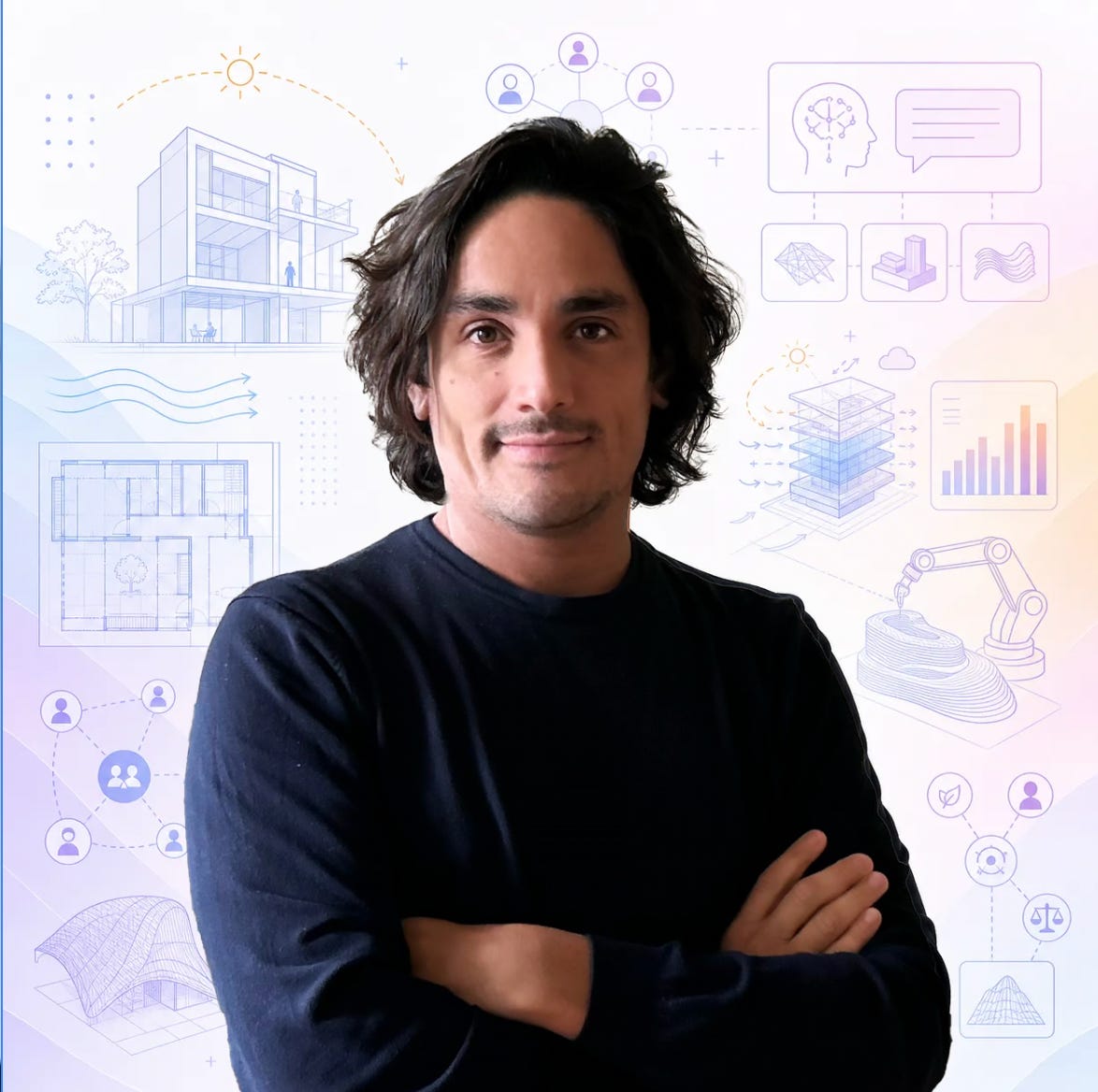
Luis Borunda teaches architecture thesis, environmental design research, and interdisciplinary projects at Virginia Tech.
Source note: This is an edited interview adapted from a narrated video submitted to OpenAI.
Intro
What happens when architecture, technology, and education converge? Luis Borunda, Assistant Professor of Advanced Building Design at Virginia Tech, has been building tools to find out. With a background in digital design, robotic fabrication, and spatial AI, Borunda works at the intersection of interdisciplinary learning and accessible technology. His research asks a deceptively simple question: what does AI make visible that was always there but never accessible? In this conversation, he talks about the tools he has built, the students who shaped them, and why the medium of learning still matters.
The Interview
Q: You describe your work as “human-centered AI and design as collaborative instruments.” What does that mean in practice?
Borunda: I grew up between a typewriter and a screen. We tinkered together with both. That combination stuck with me, not the tools themselves, but what happened in the space between them. Every new medium changes how we learn and how we connect through learning. In architecture and education, using AI to amplify our abilities means keeping that at the center of decision-making. The goal is to create systems where technology helps students be more creative, equitable, and effective, without losing the very thing that makes learning meaningful in the first place.
Q: Can you give an example of how this plays out in your teaching or research?
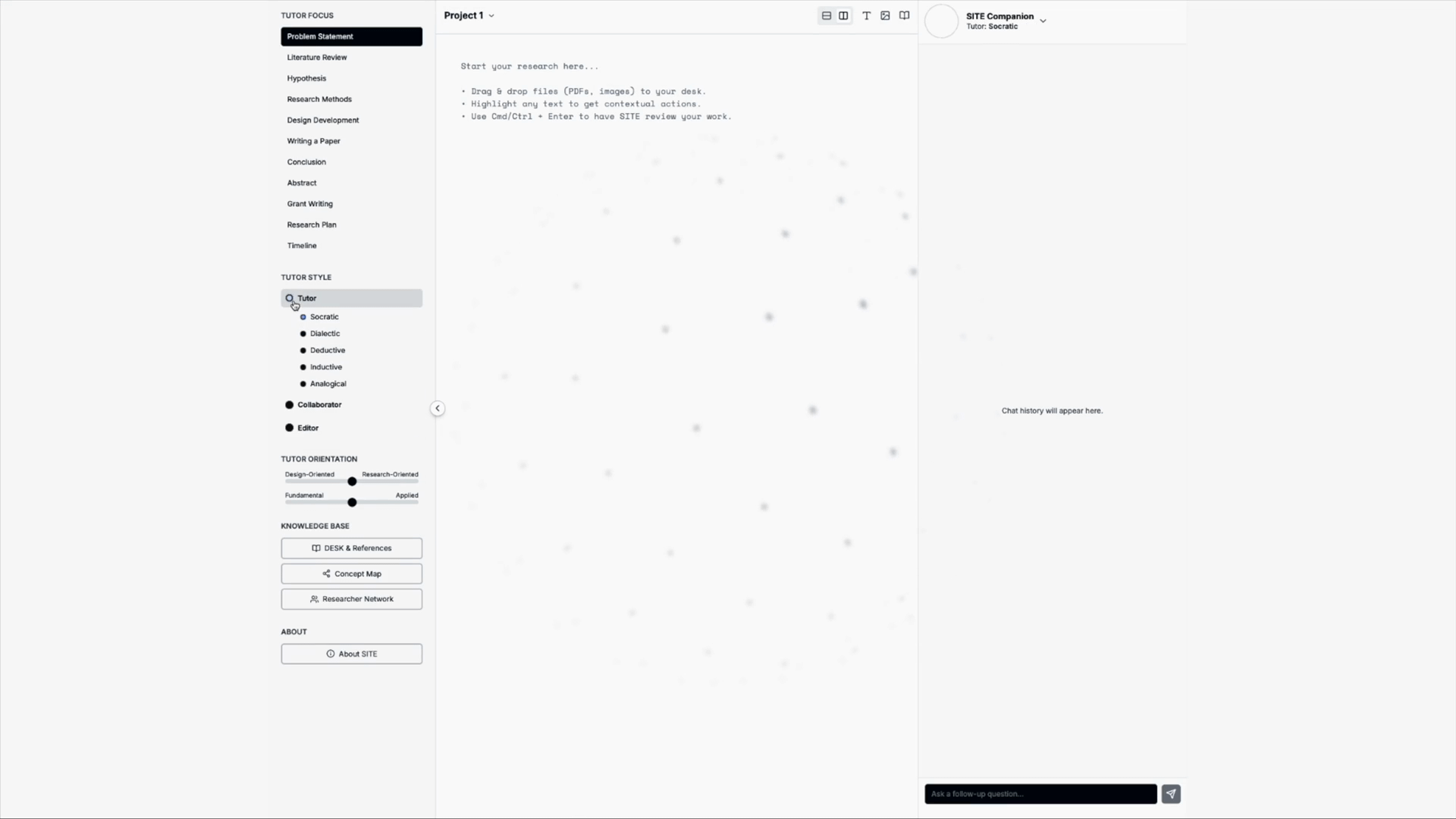
Borunda: In my university courses, students from architecture, computer science, marketing, and participatory design work together on the same problems. One custom AI tool we built helps students refine their research ideas through Socratic questioning rather than just giving them answers. A student recently told me: “This is really helping me unravel my own ideas and understand better what my thesis is about.” That is the collaborative process I am after. The AI suggests and opens space, but the student makes the choices and shapes the outcome. It is about giving them agency, not just answers.
Q: Why is preserving the human bond in learning so important, especially as AI becomes more capable?
Borunda: Growing up in a complex border city gave me a compass around equity and responsible technology, especially regarding vulnerable communities. The human bond is what makes education transformative. In architecture, we shifted from manual drafting to digital modeling, and now generative AI goes even further. But AI can render an image so clean and finished that it erases the cognitive work behind it. That struggle, that decision-making, is the bond students form with their own thinking. AI can support that process, but it cannot replace it.
Q: How do you see these approaches impacting equity and creativity in education?
Borunda: In our accessibility-focused workshops, students co-designed tools for people with visual impairments. At one point, a participant stood in front of a transparent glass door, and the AI described it to her clearly. She said: “I would have never known that this door was made out of glass if it wasn’t for the AI, not with any other of the senses I rely on.” That is what it means to open doors rather than close them. The impact is greatest when AI surfaces something that was always there but never accessible. Designing those systems thoughtfully to serve communities that technology has historically overlooked is the real work.
Q: What is next for your research and teaching in this space?
Borunda: I want to keep pushing on interdisciplinary collaborations, bringing together architects, engineers, computer scientists, and educators to work on real problems. Right now that means two directions running in parallel. One is DUO, a wearable AI platform we are building for cultural heritage spaces, where the system learns visitor preferences in real time and adapts what it surfaces about a place, who built it, what it meant. The other is field research at a UNESCO heritage site in Switzerland, where we are using egocentric cameras and spatial audio to capture how heritage experts experience and narrate territory, in collaboration with the Lugano Living Lab and USI, building an archive that did not exist before. Both projects come back to the same question: who gets to perceive a place, and what can AI make visible that was always there but never accessible. In the end, AI is not the final image. It is a way to discover what the most important and meaningful part of your story is. That is what I want to keep building toward with my students.
AI-enhanced design workflows in Borunda’s studio blend digital tools with hands-on creativity.
What Stands Out
Core idea: Luis Borunda treats AI as a medium for uncovering what matters, not a shortcut to the answer, building tools that create space for student thinking rather than replacing it.
Classroom design: His interdisciplinary studio brings together architecture, computer science, marketing, and participatory design students to work on shared problems, with custom AI tools scaffolding reflection and research rather than prescribing outcomes.
Student impact: A custom maieutic questioning tool helped students clarify their own thesis research; interdisciplinary student teams worked hand in hand with the visually impaired community to co-design navigation and accessibility tools, producing products with real social impact and giving participants new awareness of the spaces around them.
Transferable lesson: The most meaningful AI applications in education surface something that was always present but never accessible, whether that is a student’s own thinking or a space a person could not perceive before.
Bio
Luis Borunda is a licensed architect and Assistant Professor of Advanced Building Design at Virginia Tech, specializing in inclusive design, spatial AI, robotic fabrication, and AI-enhanced environments.
Borunda's framing of AI as something that "makes visible what was always there but never accessible" is the most generative line in this interview for me. It reframes the AI in education conversation away from the worn productivity register... faster, cheaper, more toward something closer to a phenomenology of access. The glass door anecdote crystallizes it: the participant didn't need new information so much as a translator between modalities. The world was already speaking; the AI just made one of its dialects audible to her.
What strikes me is how that reframe scales beyond accessibility work narrowly defined. In my own courses, the deepest learning moments tend to happen when a student suddenly perceives a structure they had been operating inside without seeing market logic, stakeholder geometry, their own assumptions. Borunda's Socratic questioning tool is doing similar work on a smaller scale: not adding information, but making the student's own thinking perceptible to themselves. The maieutic register here matters. It descends from a long pedagogical tradition - Socrates through Freire that treats teaching as drawing out rather than depositing in.
Where I'd want to press is on his warning that AI "can render an image so clean and finished that it erases the cognitive work behind it." This is the central pedagogical risk, and it cuts against the productivity logic that dominates institutional adoption. In design education the rough sketch is not a deficient final product; the visible iteration is the learning. If we let AI move students directly to the polished render, we don't accelerate learning, we shortcut it, and the bond he describes between the student and their own thinking never gets to form. His Socratic tool is one answer. The harder question is whether institutional incentives will reward that kind of slow scaffolding when faster outputs are right there.