
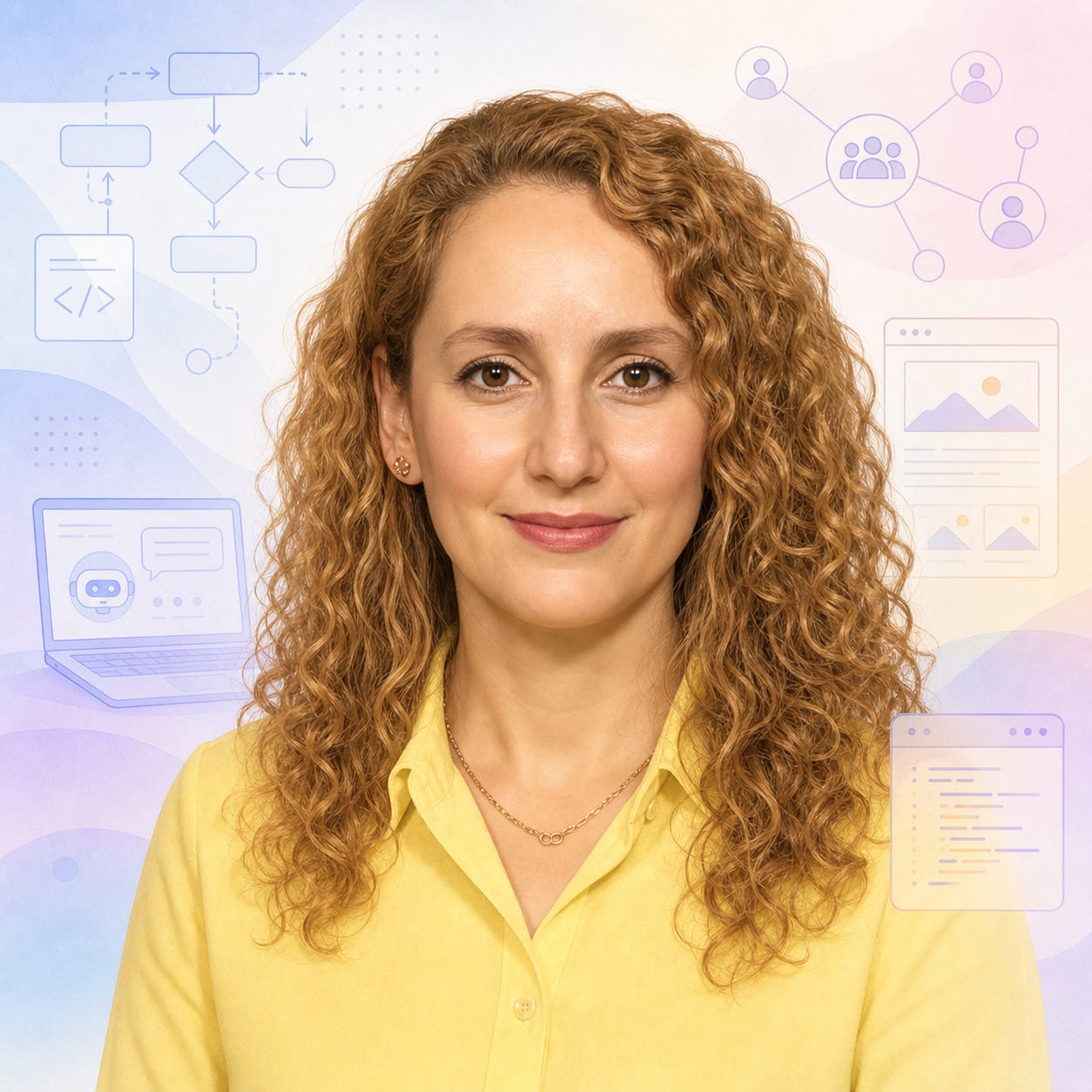
Seyma Bozkurt Uzan, Assistant Professor of Software Development at Istanbul Bilgi University in Türkiye, is on a mission to make programming classes not just informative, but unforgettable.
Source note: This is an edited interview adapted from a narrated video submitted to OpenAI. Watch the associated video in OpenAI Academy.
Intro
Seyma Bozkurt Uzan, Assistant Professor of Software Development at Istanbul Bilgi University in Türkiye, is on a mission to make programming classes not just informative, but unforgettable. By weaving together ChatGPT, visual AI tools, and collaborative publishing, she’s transforming the way Generation Z students interact with algorithms and programming concepts. In this interview, she shares her philosophy, practical classroom methods, and the impact of her approach—showing how AI can spark both understanding and creativity.
The Interview
Q: Seyma, you teach Algorithms and Programming to a generation raised on screens. What challenge does that present, and how do you approach it?
Uzan: My students are digital natives—they grew up with YouTube, iPads, and constant connectivity. But their attention spans are short, and traditional lectures don’t always engage them. I’m fortunate to teach in computer labs, so I can make every lesson interactive. My guiding principle is an old Chinese proverb: “I hear and I forget. I see and I remember. I do and I understand.” I want my students to experience all three stages—especially the “do.”
Q: How do you actually bring this principle into your classroom practice?
Uzan: I start each topic with the basics from the course book and my own explanation. But I don’t stop there. I use ChatGPT and other AI tools to generate fresh explanations, examples, and even stories about the topic. For instance, when teaching what an algorithm is, we don’t just define it. I ask students to write their own scenario—like making the perfect cup of tea—as an algorithm. If their steps are “wrong,” that’s fine; AI can help them iterate and improve.
Q: What role do visual tools and storytelling play in this process?
Uzan: Visuals and stories are essential for memory and engagement. After creating scenarios with AI, we use image generation tools to bring these stories to life. Students see their ideas visualized, which makes the abstract concepts stick. Then, to save and share this work, I have students publish their stories and images on Medium. We follow each other, comment, and build a small learning network. It’s not just about consuming knowledge—it’s about creating and sharing it. In every class, I use this system to increase interaction and engagement. Over time, my courses have started to create their own ecosystem—one where students continuously produce, share, and learn from each other beyond the classroom itself.
Q: What impact have you observed from this approach?
Uzan: students become creators, not just listeners. Second, memory: visual and story-based learning stays with them much longer. Third, community: our Medium posts and comments create a sense of belonging and a network for learning. The cycle—read, see, do—repeats every week, and students look forward to sharing their work.
Q: You mentioned a broader vision for AI in education. Can you share more?
Uzan: I believe AI can do much more than make knowledge accessible. It can inspire creativity, break language barriers, and build confidence.I am currently leading European Union–funded projects that bring together multiple disciplines through artificial intelligence. In addition, I mentor many startups, and the common theme across all of them is AI. Through the jury roles and reviewing activities I participate in, I can clearly see that people are developing incredibly innovative and inspiring projects with artificial intelligence. I want my students to learn not just technical skills, but also ethical thinking and social awareness. My hope is to give more people the chance to learn and create globally, and I welcome collaboration to expand this vision.
What Stands Out
Core idea: Seyma’s approach centers on the “hear, see, do” cycle, using AI and storytelling to make abstract programming concepts concrete and memorable.
Classroom design: Each lesson moves from textbook basics to AI-generated examples, then to student-created scenarios and visualizations, culminating in public sharing and feedback.
Student impact: Students become active creators, gain confidence, and retain knowledge longer, while building a supportive learning community.
Transferable lesson: Integrating AI tools and collaborative publishing can make any subject more dynamic, inclusive, and memorable—especially for digital-native learners.
Bio
Seyma Bozkurt Uzan is an Assistant Professor in Software Development at Istanbul Bilgi University in Türkiye. She leads an EU-funded project focused on AI-driven transformation in education and innovation, and is also involved in international research on interdisciplinary AI applications in medicine, engineering, and social sciences. Seyma is passionate about designing creative, inclusive, and interactive learning experiences using AI, and mentors young girls in science through national outreach programs. She also actively participates in international mentoring initiatives, with a special focus on supporting women and students in technology, entrepreneurship, and artificial intelligence.
excellent application in education
i teach Excel to engineering students as part of a transport phenomena course
could AI help so that creativity and student initiative be enhanced ????