
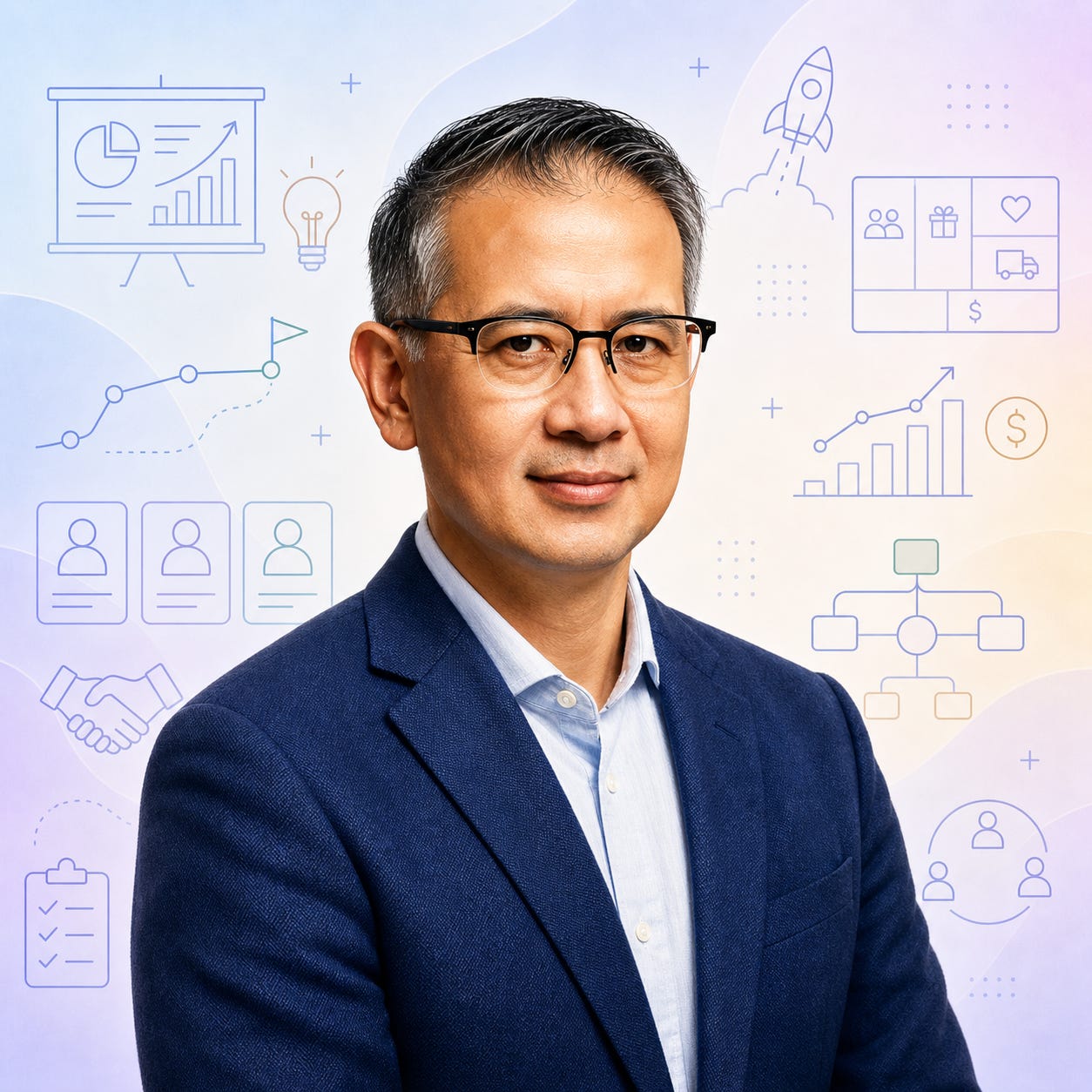
Joseph Benjamin Ilagan is Program Director of the BS Information Technology Entrepreneurship program at Ateneo de Manila University and Director of the Ateneo Business Insights Laboratory for Development. In this interview, Ilagan discusses how AI is being used in ITENT 155, ITENT 156: Technology Venture Planning, Technology Venture Laboratory.
Source note: This is an edited interview adapted from a narrated video submitted to OpenAI. Watch the associated video in OpenAI Academy.
Intro
When resources are limited, how can universities give aspiring entrepreneurs the practice and mentorship they need? Joseph Benjamin R. Ilagan, Program Director of the BS Information Technology Entrepreneurship program at Ateneo de Manila University, has a bold answer: use AI as a partner in learning. In this interview, he shares how his team built custom AI simulators to help students master customer validation, iterate on business models, and gain confidence, while always keeping real-world testing at the center. Ilagan’s approach offers a glimpse into the future of entrepreneurship education, especially in contexts where access to mentors and industry partners is scarce.
The Interview
Q: Joseph, can you describe your role and how it connects to your work with AI in entrepreneurship education?
Ilagan: I lead the BS Information Technology Entrepreneurship Program at Ateneo de Manila University, and I also direct the Ateneo Business Insights Laboratory for Development, or BUILD. Through BUILD, we connect students, faculty, and industry around data and technology initiatives, with a particular focus on generative AI. In our program, we emphasize lean startup principles and customer validation, helping students identify real problems, test their assumptions, and refine their ideas. AI has become a key partner in this process, not as a shortcut, but as a way to enable more experimentation and iterative learning.
Q: What motivated you to build AI-powered simulators for your students?
Ilagan: The reality in the Philippines is that we have limited access to industry mentors. We needed a way to augment mentorship and provide feedback that’s affordable and available anytime. Our goal was to use AI as a great equalizer, giving every student more opportunities to practice, regardless of resources. We wanted simulations that adapt to each student’s business model, supporting truly adaptive learning. But we’re clear: these tools are for preparation. They don’t replace the real-world validation that still needs to happen outside the classroom.
Q: How do these simulators actually work? Can you walk us through an example?
Ilagan: Certainly. We built a simulation bot using the OpenAI API. Students begin by providing their business model, which the system uses as context. The bot then engages them with targeted questions, clarifying their target segment, testing their value proposition, or probing whether the problem they’ve identified is real and significant. After a few back-and-forths, the bot gives structured feedback, highlighting gaps and pointing to areas that need real-world validation. It’s not a substitute for talking to customers, but it gives students a safe, repeatable environment to refine their thinking before stepping outside.
Q: What design choices did you make to ensure these tools would be effective in your context?
Ilagan: We focused on accessibility and adaptability. Deploying through a simple web app kept things familiar and easy to use. Our prompt frameworks adapt to each student’s venture, so feedback is always relevant. We also tracked changes in student confidence and preparedness through pre- and post-session surveys. Beyond the customer validation bot, we built a customer interview simulator with synthetic customers and a financial modeling coach, all grounded in the student’s own business model.
Q: What have you observed in terms of student impact?
Ilagan: Students are practicing more consistently outside class and have become more confident in asking the right questions, about customer segments, value propositions, revenue models, and more. Their expectations are now calibrated; they’re more aware of the gaps that still need to be tested in the real world. For faculty, the reduced setup time lets us focus on critique and reflection. And we’ve seen students inspired to integrate AI into their own ventures, like Sync Studios, which uses AI for user experience diagnostics and image generation for brands.
Q: What’s your ultimate goal for graduates of your program?
Ilagan: We want to graduate entrepreneurs who integrate AI thoughtfully and responsibly in their work. These simulators are meant to augment, not replace, real-world validation. Our hope is that students leave with both the confidence and the humility to keep testing their ideas with real customers, using AI as a tool for deeper, more frequent learning.
What Stands Out
Core idea: AI-powered simulators can democratize access to feedback and mentorship for student entrepreneurs, especially in under-resourced environments.
Classroom design: The simulators are adaptive, grounded in each student’s business model, and accessible through a simple web app, allowing for repeated, self-paced practice.
Student impact: Students gain confidence, practice more consistently, and develop a sharper sense of what needs to be validated in the real world, while faculty can focus on higher-level critique.
Transferable lesson: AI can be a powerful partner in education, not as a substitute for reality, but as a scalable way to prepare students for real-world challenges.
Bio
Joseph Benjamin Ilagan, Ph.D., is Program Director of the BS Information Technology Entrepreneurship program at Ateneo de Manila University and Director of the Ateneo Business Insights Laboratory for Development.
“Very insightful approach. Using AI as a practice partner for entrepreneurship education is a smart way to bridge the mentorship gap, especially in resource-limited environments.”