

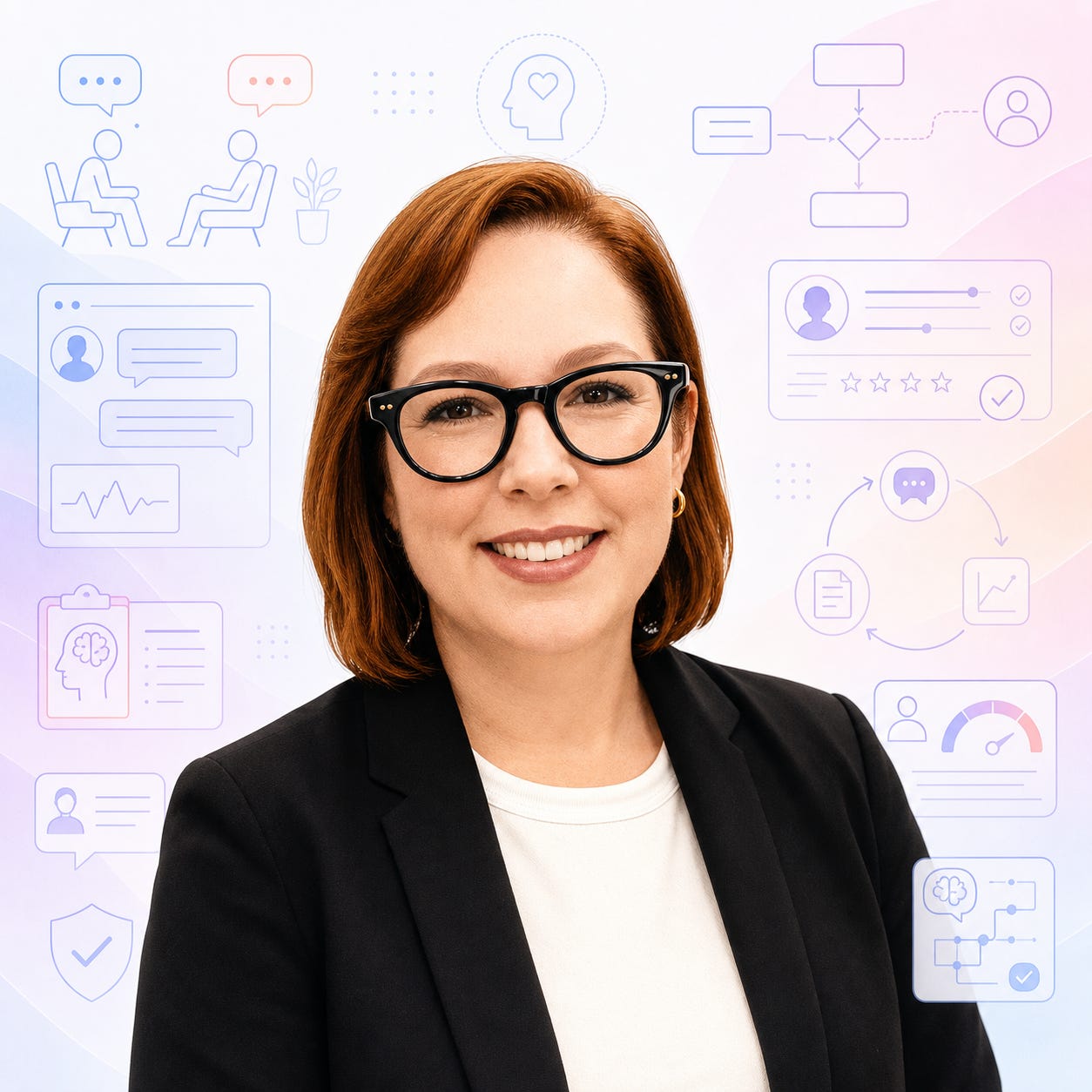
Dr. Nydia Cappas teaches Psy 6850 Conceptualization and Treatment Planning at Ponce Health Sciences University. In this interview, Cappas discusses how AI is being used in Psy 6850 Conceptualization and Treatment Planning.
Source note: This is an edited interview adapted from a narrated video submitted to OpenAI. Watch the associated video in OpenAI Academy.
Intro
What does it take to prepare the next generation of clinical psychologists in an era where AI can write papers, draft case conceptualizations, and even simulate patients? Dr. Nydia Cappas, a clinical psychology professor at Ponce Health Sciences University in Puerto Rico, has spent nearly two decades teaching—and in her words, the last few years have been the most creative and innovative of her career. In this conversation, Dr. Cappas shares how she’s leveraging AI to create authentic learning experiences, build student confidence, and foster a collaborative classroom culture.
The Interview
Q: Dr. Cappas, you’ve described the last few years as your most creative and innovative in teaching. What sparked this transformation?
Cappas: How do I ensure my students are truly learning clinical skills and competencies in an age when AI can easily generate essays or conceptualizations? I realized that traditional assessments were becoming obsolete. So, I started identifying the non-negotiable skills my students must develop—sometimes related to writing, but often more practical. From there, I brainstormed ways to assess and practice those skills, both with and without AI. The process became a journey I share openly with my students, experimenting together and learning as we go.
Q: Can you give us a concrete example of how you’re using AI in your teaching?
Cappas: Absolutely. One of my favorite innovations is a custom GPT patient simulator for teaching motivational interviewing. Motivational interviewing is a therapeutic approach that helps people make positive changes—even when they’re not ready to change. I built a GPT-based patient in the “pre-contemplation” stage, where the person doesn’t yet recognize the need for change. My students interact with this simulated patient, practicing techniques and questions in a safe environment. What’s great is that students can use this tool even with the free version of ChatGPT, so access isn’t a barrier.
Q: How do you integrate this tool into your courses, and what impact have you seen?
Cappas: I introduce the GPT patient in class so everyone understands the task and feels comfortable. Students practice live, ask precise questions, and get immediate feedback. I also use the chat logs or PDFs of their conversations as assessments, which lets me pinpoint exactly where students need more support. The feedback has been phenomenal—students are more engaged, and classes are more fun. Plus, my openness to AI has encouraged students to share their own creative approaches, like the student who wrote a salsa song about anxiety disorders!
Q: What’s your process for building these AI tools? Any advice for other educators?
Cappas: It’s simpler than people think. I used ChatGPT itself to help me build the prompt for the patient simulator. I described what I wanted, refined it through a few iterations, and tested it with students. The key is to be open, experiment, and treat it as a collaborative journey with your students. Also, think carefully about which skills should and shouldn’t be delegated to AI. We need to be at the table where these decisions are made, especially those who are concerned about AI’s impact on learning.
Q: You mentioned time management. How has AI changed your workflow as an educator?
Cappas: AI has been a game-changer for time management. I use voice mode during my commute to brainstorm and plan. It’s made my workflow more efficient and enjoyable. Sharing these tools with colleagues has also sparked a culture of innovation—professors exchange ideas and learn from each other, which benefits everyone.
Q: What’s your big-picture takeaway about AI in education?
Cappas: AI can be a powerful tool for teaching and learning, but only if we approach it thoughtfully. It can also hinder learning if misused. That’s why it’s crucial for professors to engage deeply with AI, understand its strengths and limitations, and help shape how it’s used in education. We need more educators at the decision-making table. That’s my motivation for sharing my experiences.
What Stands Out
Core idea: Dr. Cappas focuses on teaching clinical skills that cannot be replaced by AI, ensuring authentic student learning.
Classroom design: She integrates custom GPT patient simulators to provide students with safe, hands-on practice in therapeutic techniques.
Student impact: Students are more engaged, receive immediate feedback, and feel encouraged to share creative approaches in a collaborative environment.
Transferable lesson: Educators should experiment openly with AI tools, involve students in the process, and actively participate in shaping AI’s role in education.
Bio
Dr. Nydia M. Cappas is a clinical psychologist, educator, and academic leader dedicated to integrating mental and physical health in doctoral training. She blends science, innovation, and real-world application to transform how psychology is taught and practiced.
This is very innovative. AI is indeed a game changer in Education.
Boring, nothing I learned from it