

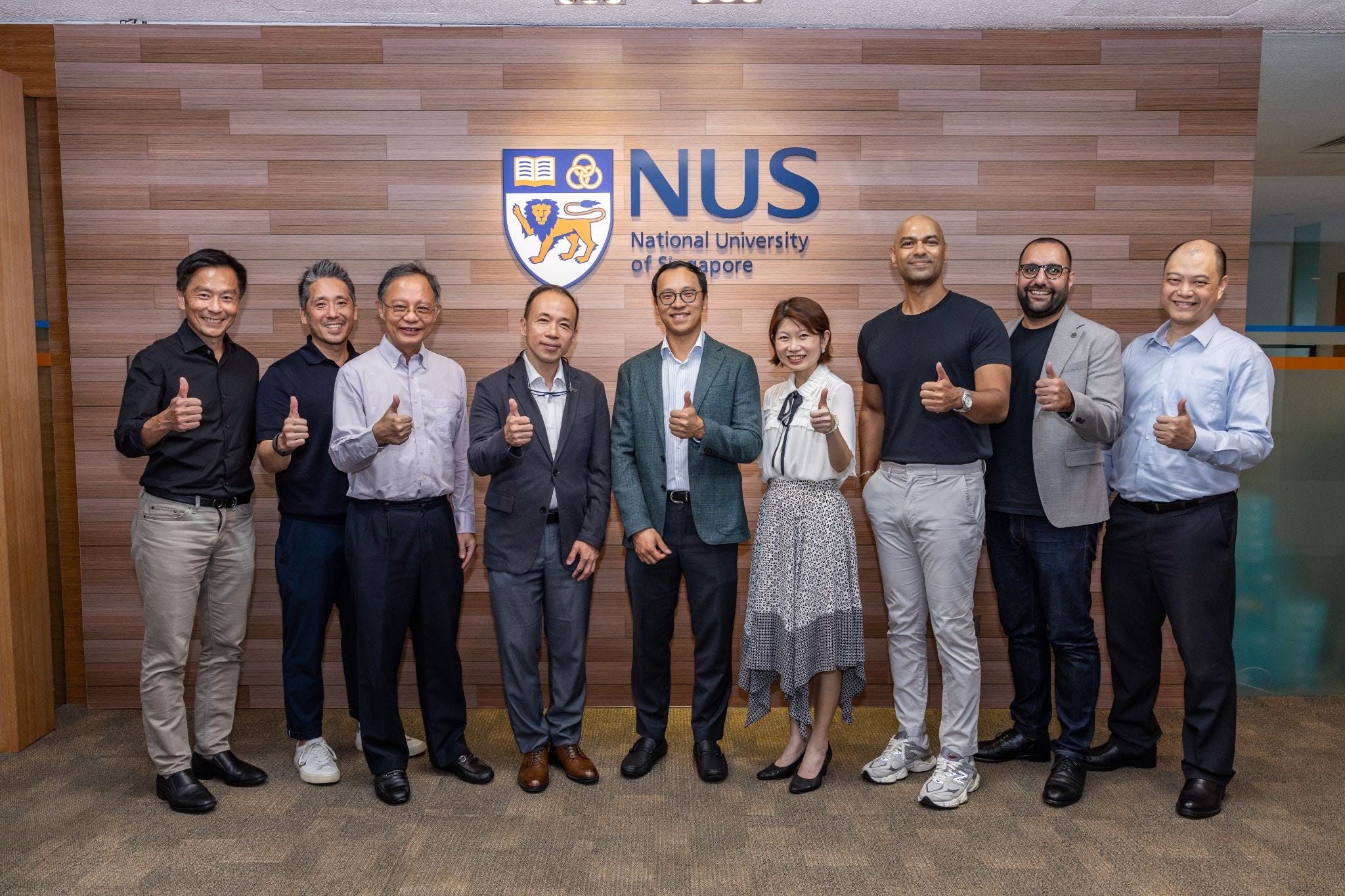
Today, the National University of Singapore (NUS) and OpenAI announced a strategic collaboration to expand how students, educators, researchers, and staff can learn, build and lead with AI.
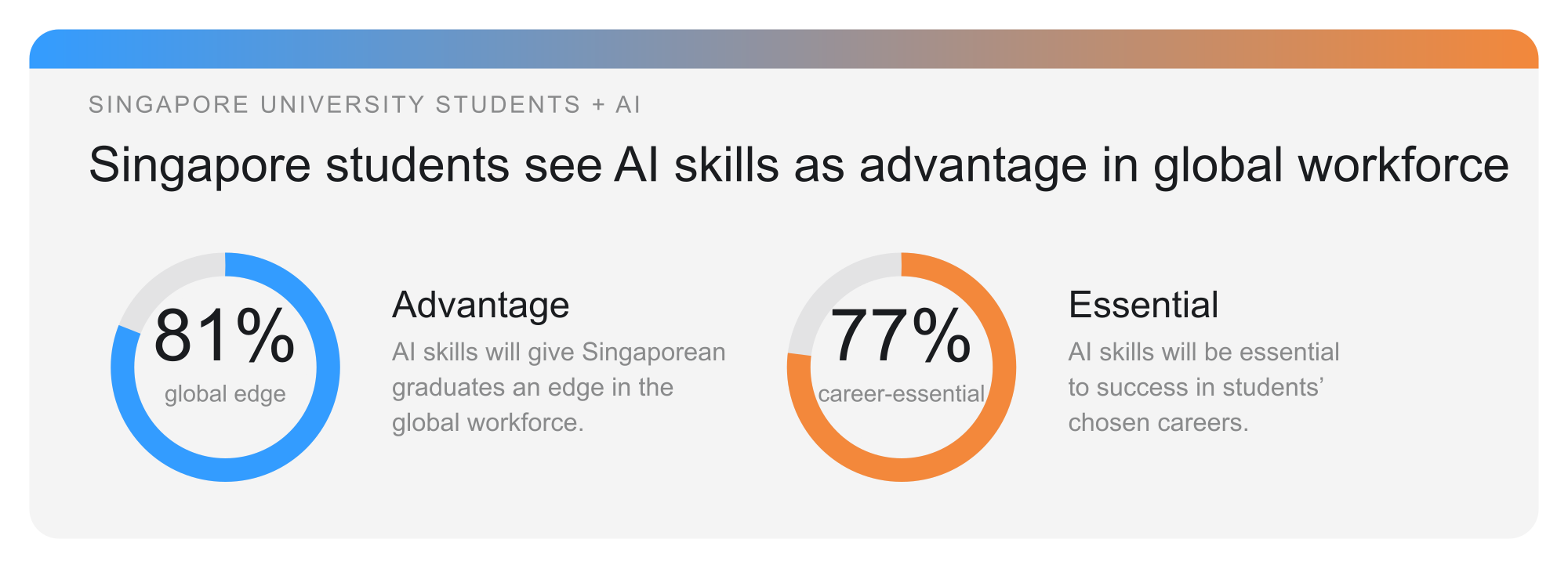
The announcement comes as new research* shows that around eight in ten university students in Singapore believe AI skills will give them an advantage in the global workforce (81%), and be essential to their careers (77%). The findings also point to an ambitious, optimistic generation eager to shape its future with AI.
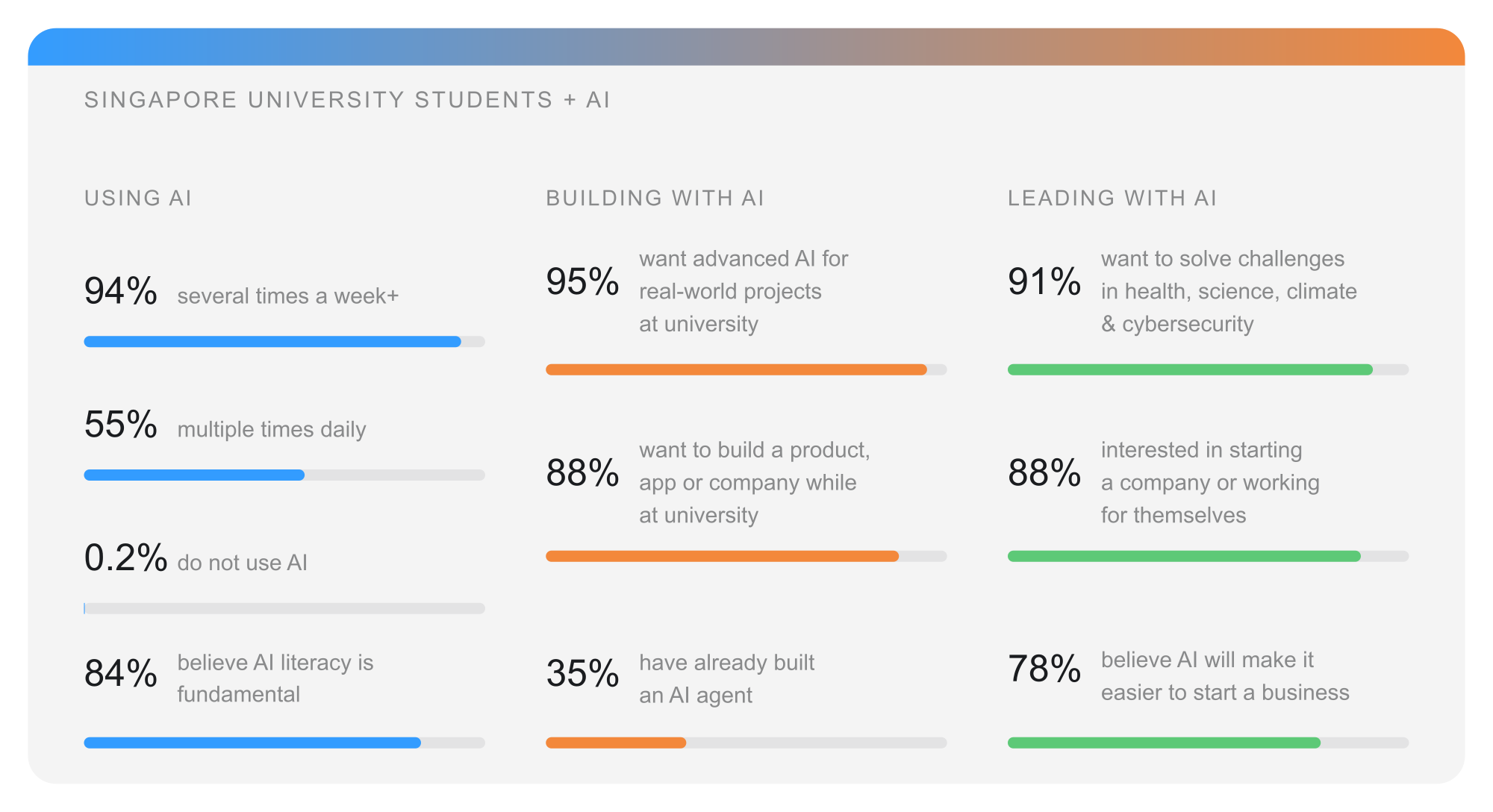
In a survey of over 500 university students exploring AI habits, career aspirations, and appetite for innovation, 94% said they use AI several times a week or more, with more than half (55%) using it multiple times each day.
As Singapore’s leading university, NUS recognizes its role in helping students navigate a rapidly evolving future, particularly as 84% of student respondents believe AI literacy will become as fundamental as digital literacy, writing and numeracy.
Singapore’s education system is among the world’s best, and young Singaporeans are already highly active AI users. Among 18-24-year-olds, OpenAI found around 43% of ChatGPT usage is related to learning and education.
The next step is deepening AI literacy to support teaching, improve learning outcomes, and prepare young people for the future workforce.
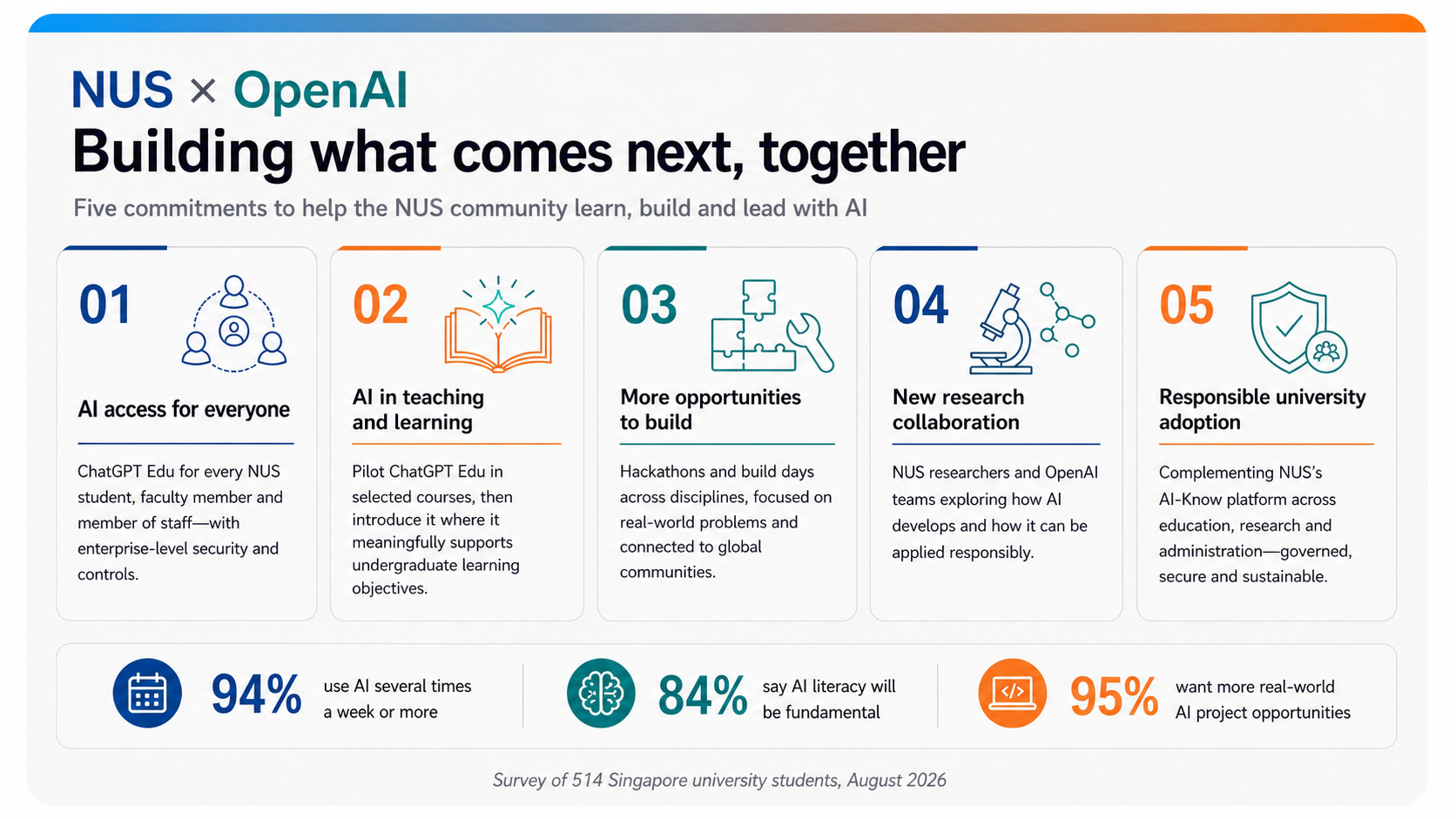
The collaboration will:
Expand AI access across NUS. Every NUS student, faculty member, and member of staff will have access to ChatGPT Edu, including enterprise-level security and controls.
Bring advanced AI tools into teaching and learning. ChatGPT Edu will initially be piloted in selected courses, before being introduced into undergraduate courses where it can meaningfully support learning objectives.
Create more opportunities for students to build. Students across disciplines will be able to participate in hackathons and build days, focusing on real-world problems, with opportunities to connect to OpenAI’s global networks and communities.
Explore new research collaborations. NUS researchers and OpenAI teams will work together on important questions about how AI develops and how it can be applied responsibly.
Support responsible adoption across the university. OpenAI’s tools will complement NUS’s internally developed AI-Know platform as the university introduces AI into education, research, and administration in a governed, secure, and sustainable way.
These focus areas reflect what students say they want from their universities. In the same survey, 95% of students in Singapore wanted more opportunities to use advanced AI tools on real-world university projects, and 88% wanted to build an AI app, product or company while at university.
Beyond using generative AI as a thinking partner, AI agents are of increasing interest to students to help get work done, with a third (35%) having already built their own AI agent or assistant to help manage their studies, work or personal life.
Building on our earlier collaboration with the NUS School of Computing, we’ve seen users engage more deeply with ChatGPT and adopt Codex, OpenAI’s coding agent, at higher rates than users at similarly sized universities. One of the interesting projects that has surfaced is Research Brain.
Building a second brain for research
Gao Bin is a postdoctoral researcher in Computer Science at the NUS School of Computing. While working on their main research, Gao Bin and his team kept running into the same challenge. The information they needed was scattered across research papers, technical reports, white papers, blogs, and GitHub repositories.
The team was spending too much time searching for, downloading, and organising information before they could begin using it.
So they built what Gao calls a Research Brain.
With access to Codex and OpenAI models through NUS, the team created a system that regularly finds, reads, and organizes the material, and brings the text and figures together in one searchable knowledge base.
Instead of repeatedly searching across different websites and reopening stacks of PDFs, Gao’s team can now start from one organized collection. They can ask questions across the material, compare experimental methods, find connections between papers, and explore possible directions for their own research.
The Research Brain was not their main project. It was a side project designed to make their main research easier.
That is precisely why Codex made a difference. Building this kind of research infrastructure manually would have required considerable time and effort. With Codex, the team could turn a recurring frustration into a working tool while continuing to focus on their primary research.
When people use AI to make something they care about, we believe that’s where much of AI’s value begins.
“We aim to leverage these advanced AI technologies not as replacements, but as powerful amplifiers of human intellect, creativity and judgment.”
— Professor Aaron Thean, Deputy President (Academic Affairs) and Provost of NUS
When educators become builders
The same curiosity is visible among NUS educators.
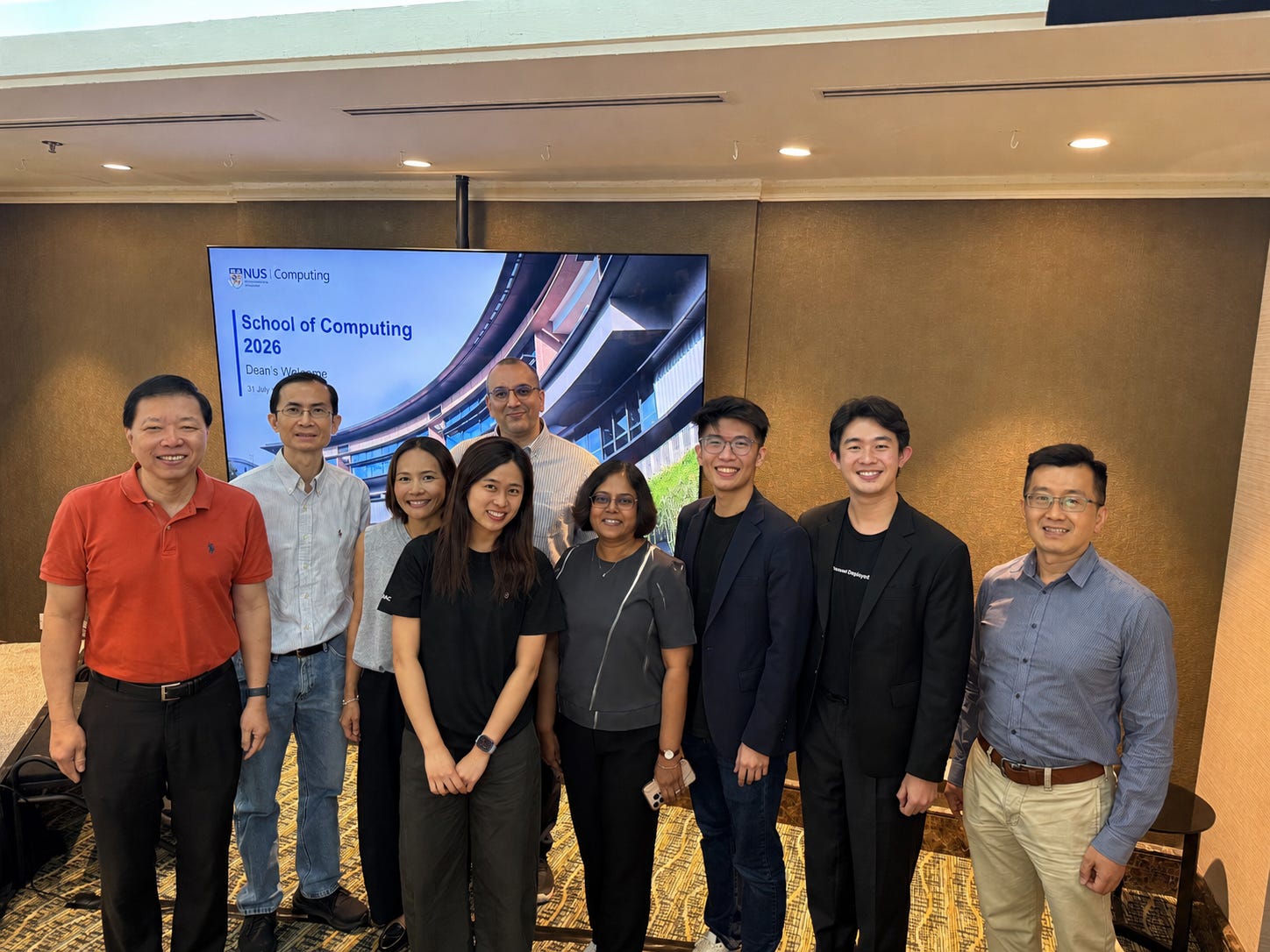
OpenAI recently supported a faculty hackathon with the NUS School of Computing, where faculty members worked hands-on with AI tools including Codex to prototype real solutions in a short sprint. The results showed just how broad the possibilities could be.
One team built a Video Assessment Coach, which turns recordings of student performances into focused, evidence-linked feedback
Another created Continuum, a knowledge-graph tool designed to bring structure to meeting notes, discussions, and decisions.
Beyond access
Making ChatGPT available across NUS is only one part of this journey.
Every university is working through some version of the same question: How might AI support new ways of teaching? What does responsible use look like? Where can AI open up new kinds of research?
As a research lab, OpenAI will explore research collaboration with NUS, bringing together the questions our teams are working on with the ideas and expertise already here. That matters because universities should help shape how it develops and how it is used.
Developing AI talent for Singapore
This collaboration also supports our broader commitment through OpenAI for Singapore, a multi-year partnership with the Singapore government to expand access to AI and strengthen Singapore’s applied AI capabilities.
A central part of this commitment is hiring more than 200 applied technology and technical-success roles in Singapore in the coming years. Education will be essential to that work. Singapore’s long-term advantage will come from developing people who know how to apply, question, govern, and build with AI.
Students also connect these capabilities to Singapore’s competitiveness. The vast majority of respondents (81%) believe that AI skills will give Singaporean graduates an advantage in the global workforce, while 77% said those skills would be essential to succeeding in their chosen career.
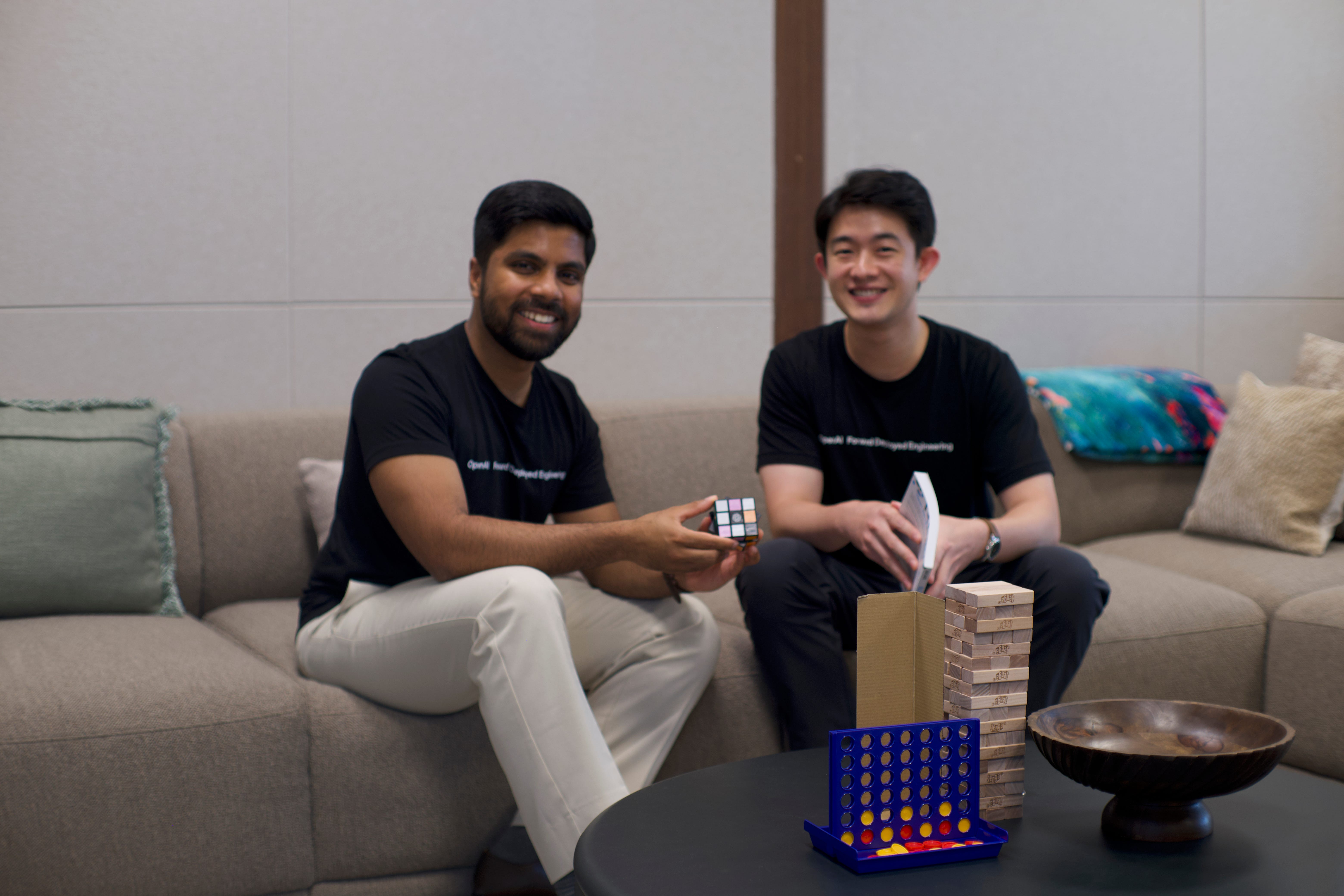
We are already seeing NUS talent making a difference in this space at OpenAI.
Jordan Seow, a 2021 graduate of the NUS School of Computing, is now a Forward Deployed Engineer at OpenAI. Based in Singapore, he works directly with organizations to translate frontier AI capabilities into systems that solve practical problems.
Fellow NUS alumnus Sharan Thangavel also returned to Singapore after working across several international markets. He now helps organisations move from promising AI ideas to systems that create value in complex operating environments.
Their journeys show one possible path from university classrooms to the teams deploying AI across Singapore and the region. As more students gain practical experience with ChatGPT and Codex, we hope many more will help shape what comes next not only at OpenAI, but also across Singapore’s companies and institutions, and across its wider AI ecosystem.
“Singapore has an extraordinary opportunity to shape how AI contributes to education, research and innovation, and NUS has an important role to play in that future.”
— Oliver Jay, Managing Director, International at OpenAI
Building what comes next, together
NUS has long understood that a university should do more than prepare people for the future. It should help shape that future.
Used well, AI can give people more time, more confidence, and more room for the things that remain deeply human: questioning, teaching, discovering, imagining, and caring.
We’re excited to see what the NUS community builds next.
About the research:
*This study was conducted by Pureprofile on behalf of OpenAI from 3rd to 7th August 2026, surveying 514 university students in Singapore aged 18+ years, studying either on-campus or remotely.

The Research Brain example is more consequential than it may first appear. Its value is not simply that it makes literature review faster; it changes the unit of work from “asking a model about papers” to maintaining a living, inspectable research system. For that to be useful in a university setting, however, retrieval alone is not enough. Each answer needs to preserve provenance: the underlying passage, figure, version, publication date, and the limits of what the corpus contains. Otherwise, a polished synthesis can quietly turn into an untraceable research claim.
This is also where agentic AI becomes a practical educational question rather than a novelty. An agent that periodically discovers sources, classifies them, detects duplicates, flags conflicting results, and prepares a review queue can save substantial effort. But the researcher should remain the person who decides what enters the knowledge base, how evidence is weighted, and whether a proposed connection is meaningful. The most effective systems are not autonomous replacements for scholarly judgment; they are workflows that make judgment available at the right moments.
The same principle should shape deployment beyond research. Giving an entire university access to ChatGPT Edu and Codex is an important capability layer, but durable adoption will depend on whether courses teach students to specify tasks, inspect intermediate steps, test outputs, and document accountability. Graduates who can build agents are valuable; graduates who can design reliable human-agent operating models will be far rarer—and likely more valuable to the organisations that eventually deploy these systems.
Nice one. Great to connect with you.
I write about Deep System design,Engineering, tech, how to build things in tech at a deeper level, AI/ML inference, Benchmarks, LLMs and How to Quants, please checkout some of my posts ( more than 370000 reads) -
https://howtosystemdesigneverything.substack.com/
https://aiinferenceandoptimizations.substack.com/
[Important AI Inference Pulse #4] KV Cache: The One Piece of Memory That Can Eat an Entire Expensive Chip — Just By Remembering- How It Actually Works
https://aiinferenceandoptimizations.substack.com/p/important-ai-inference-pulse-4-kv?r=14q3sp
[Bookmark : Most Important] Top System Design and Engineering Post Mortem Weekly Round Up : https://howtosystemdesigneverything.substack.com/p/bookmark-most-important-top-system?r=14q3sp&utm_campaign=post-expanded-share&utm_medium=web
[Celebration Time : Giveaway] 400,000 Reads, 5200 subscribers, System Design, ML System Design Playlist Gone Viral including Case studies [Bookmark]
https://howtosystemdesigneverything.substack.com/p/celebration-time-giveaway-400000?r=14q3sp&utm_campaign=post-expanded-share&utm_medium=web