

Issue 5: September 1, 2026
In This Issue
Feature: ChatGPT for Teachers expands to more U.S. school districts.
Product Corner: Interactive quizzes bring quick practice into ChatGPT.
Around the World: Lynwood Unified shows how districts can build trust, policy, and agency around AI.
Try This: Two ready-to-open prompts for K-12 and higher education, plus a sticker idea.
Offer: Free ChatGPT Plus for college students.
Learning with OpenAI: Two new education courses from OpenAI Academy.

Feature: ChatGPT for Teachers Expanding Across the Country
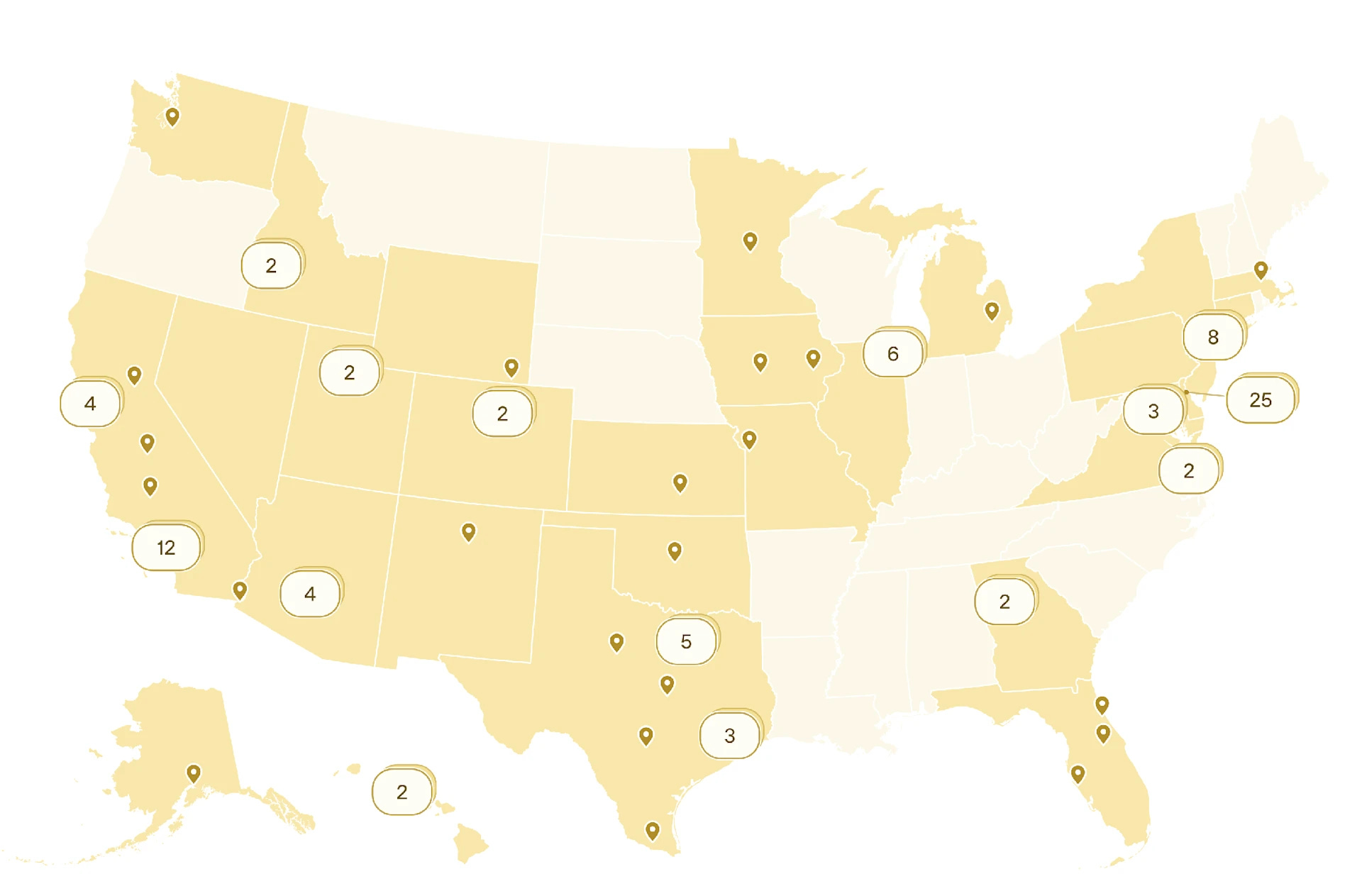
ChatGPT for Teachers is expanding to 55 additional school systems across 20 states, reaching more than 100,000 additional educators and staff.
With this new group, OpenAI is now working with more than 100 K-12 organizations across 30 states to provide free access and training to more than 300,000 educators and staff. The expansion also includes a data privacy agreement across 16 states, giving districts a clearer framework for evaluating ChatGPT for Teachers against student-data requirements.
For schools, the work is not only about access. It is about helping educators build confidence, ask better questions, protect student data, and decide where AI can responsibly support the work they already do.

Product Corner: Interactive Quizzes
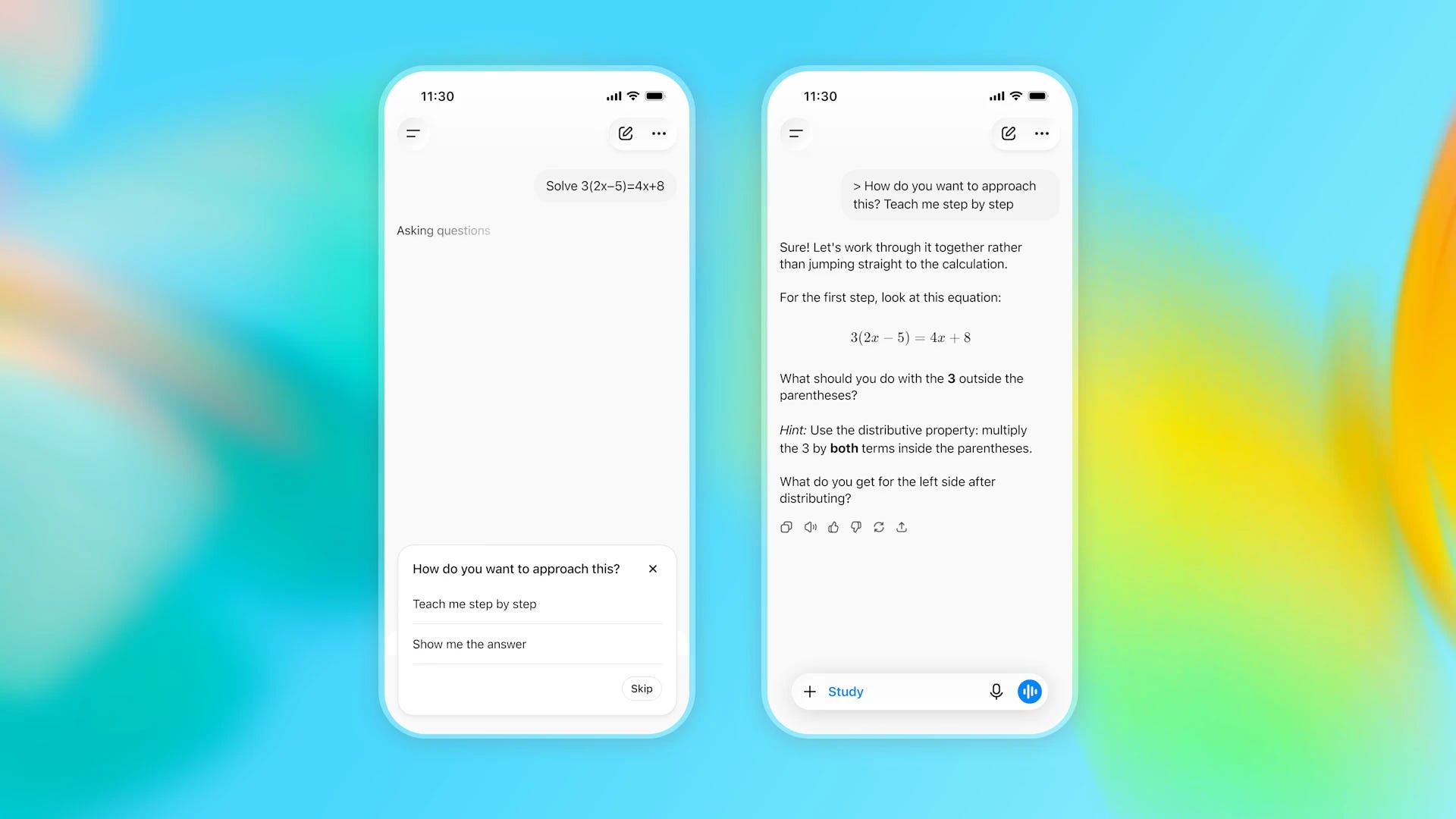
ChatGPT now makes it easier to practice with interactive quizzes. Students can ask ChatGPT to quiz them on a topic and answer directly in the conversation, with feedback along the way.
For educators, this can be a quick way to model retrieval practice, help students check understanding before a larger assessment, or turn class notes into a low-stakes review routine.
Prompt to try
Quiz me on [topic] one question at a time. Wait for my answer before giving feedback. Mix recall, application, and one reflection question. If I miss something, explain the idea briefly and ask a follow-up so I can try again.

Around the World: Lynwood’s AI Roadmap
Patrick Gittisriboongul, superintendent of Lynwood Unified School District, has framed AI as a question of agency: students should be early participants in the future, not late recipients.
Lynwood’s approach starts with trust. The district created an AI task force grounded in equity, safety, and ethics, then mapped a three-year path: first policies and listening, then teacher pilots, and finally student-created AI tools for tutoring, learning, and problem-solving.
One practical example is DistrictKit.AI, a set of free tools across district administration, curriculum and instruction, budget and finance, HR, and technology. The point is to keep educators in control while giving them more support for the work in front of them.
Watch the full Forum conversation

Try This: Seating Plans, Practice Scenarios, and Stickers
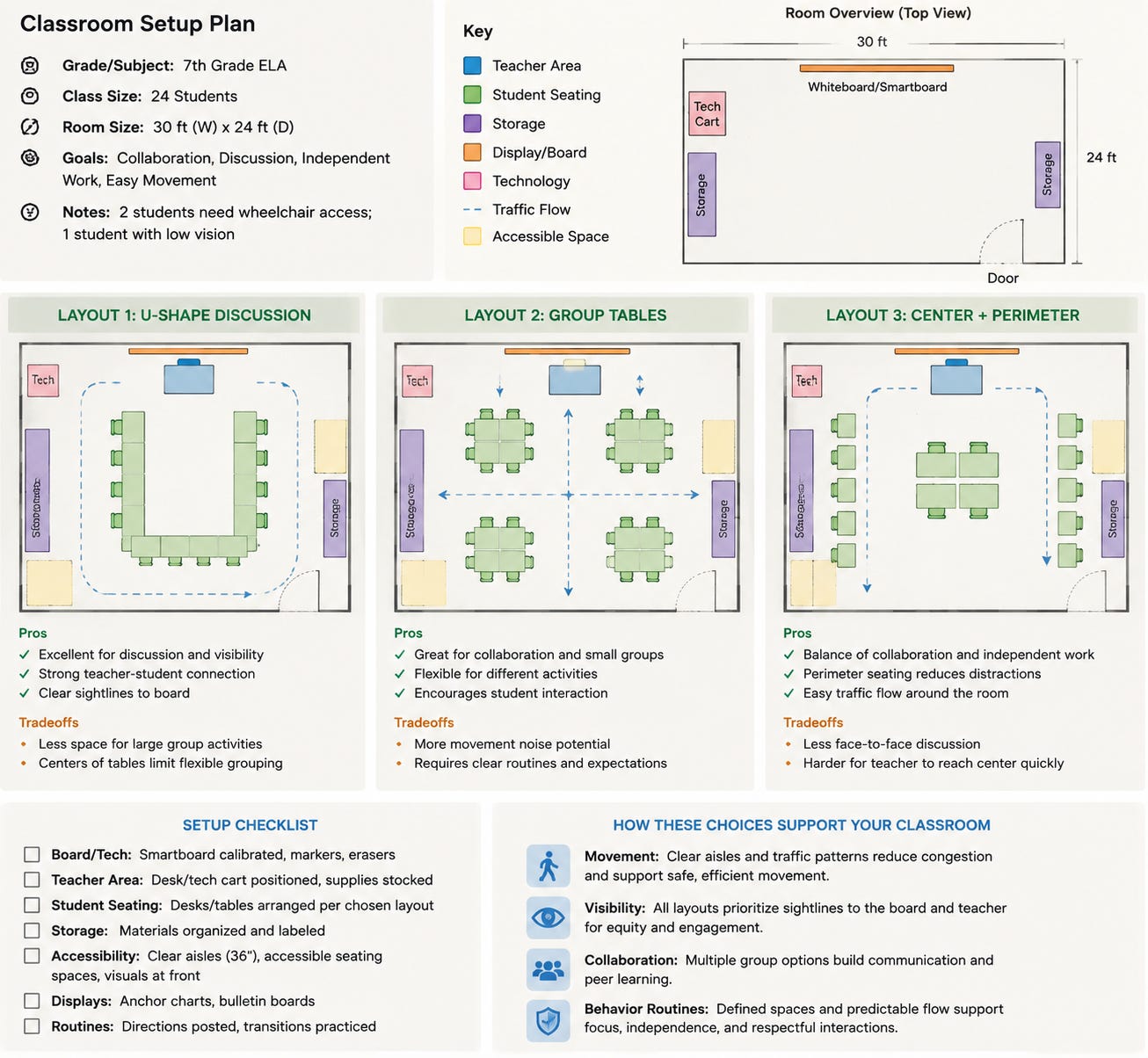
For K-12 teachers: plan the room before moving the furniture. A classroom setup can shape movement, attention, collaboration, and routines. If you have dimensions, furniture, fixed features, and photos, ChatGPT can help compare possible layouts before anyone starts moving desks.
Prompt to try
I am a K-12 teacher setting up my classroom for [grade/subject]. Help me create a seating and room setup plan. I will provide room dimensions, furniture, fixed features, class size, accessibility needs, learning goals, and photos of the space. Ask me for any missing details first, then suggest 2-3 layouts with pros and tradeoffs. Include a simple setup checklist and explain how each choice supports movement, visibility, collaboration, and behavior routines.
For higher education: build a short practice scenario. Use ChatGPT to turn a course goal into a quick rehearsal students can try before a discussion, lab, oral exam, advising conversation, clinical case, or project review.
Prompt to try
I teach a higher education course on [topic]. Help me turn next week’s class into a short practice activity. Use my learning objective, reading, class size, time available, and student level. Give me a 10-minute activity, likely misconceptions, a simple rubric, and one reflection question. Keep me responsible for final review, accuracy, and fit for my course.
Bonus idea: classroom stickers. Use ChatGPT to draft short, printable sticker copy for the first few weeks of school: effort, revision, curiosity, collaboration, and responsible AI habits.
Prompt to try
Create 12 short printable sticker phrases for a K-12 classroom. Make them warm, specific, and age-appropriate. Celebrate revision, curiosity, asking better questions, helping a classmate, responsible AI use, and sticking with a hard problem. Keep each phrase under six words.
Offer: Student Offers for ChatGPT Plus and Codex
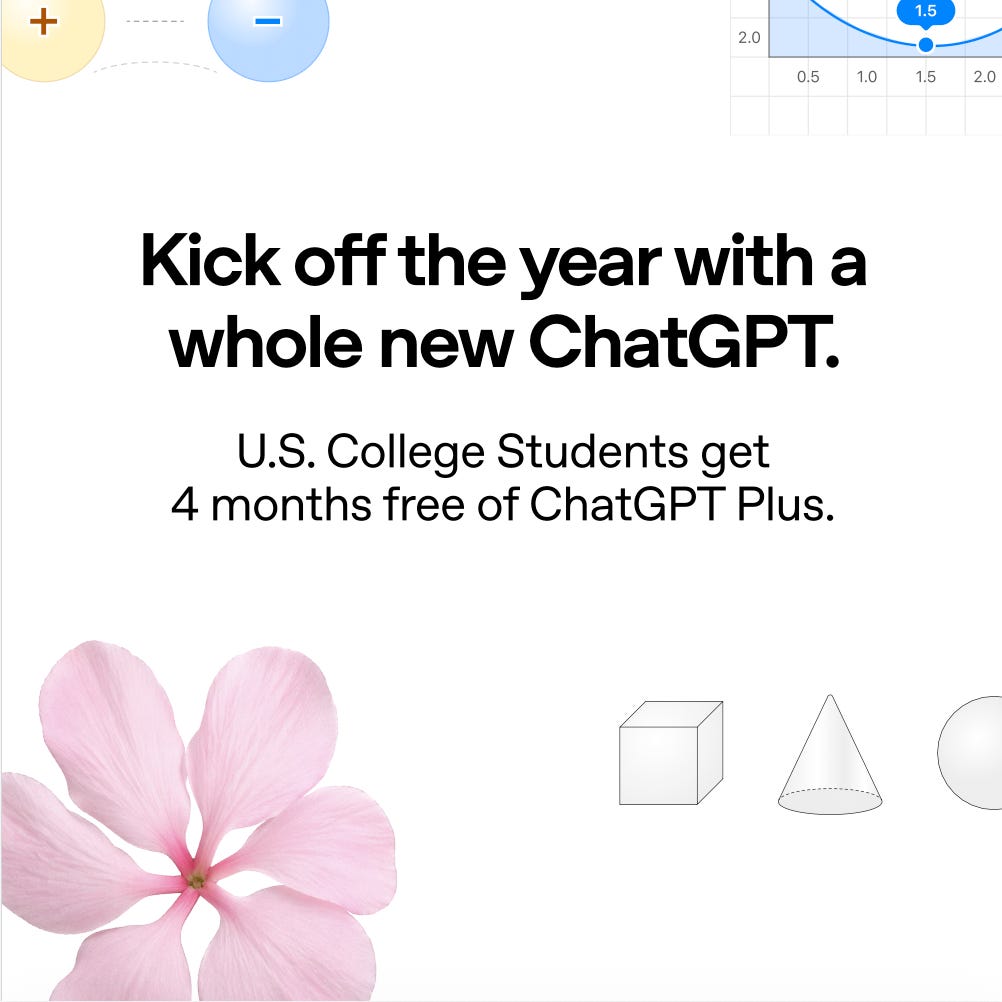
U.S. college students who don't have ChatGPT EDU provided by their campus can claim four free months of ChatGPT Plus and experience the power of ChatGPT Work through Oct. 31, 2026.
Read about the ChatGPT Plus student offer
Learning with OpenAI: New Academy Courses
Two new Academy courses: Mark your calendar. Two role-specific education courses launch in OpenAI Academy on September 9.
AI for Educators helps educators use permitted course materials to plan lessons, create activities and assessments, add support or challenge, and adapt communications for students, families, or colleagues.
ChatGPT for Higher Education Students helps students organize coursework, plan group projects, review drafts, and turn experience into material for resumes, portfolios, applications, or interviews.
See upcoming OpenAI Academy events
Have a story idea?
We want to hear how educators, students, and school communities are using AI in practical, responsible, and creative ways. Reply to this email with a story, classroom example, question, or idea for a future issue.

This prompt is very valid, as it complements and strengthens the explanation.
https://substack.com/@wisdomfirst/note/p-214116672?r=1nn7vp&utm_medium=ios&utm_source=notes-share-action