
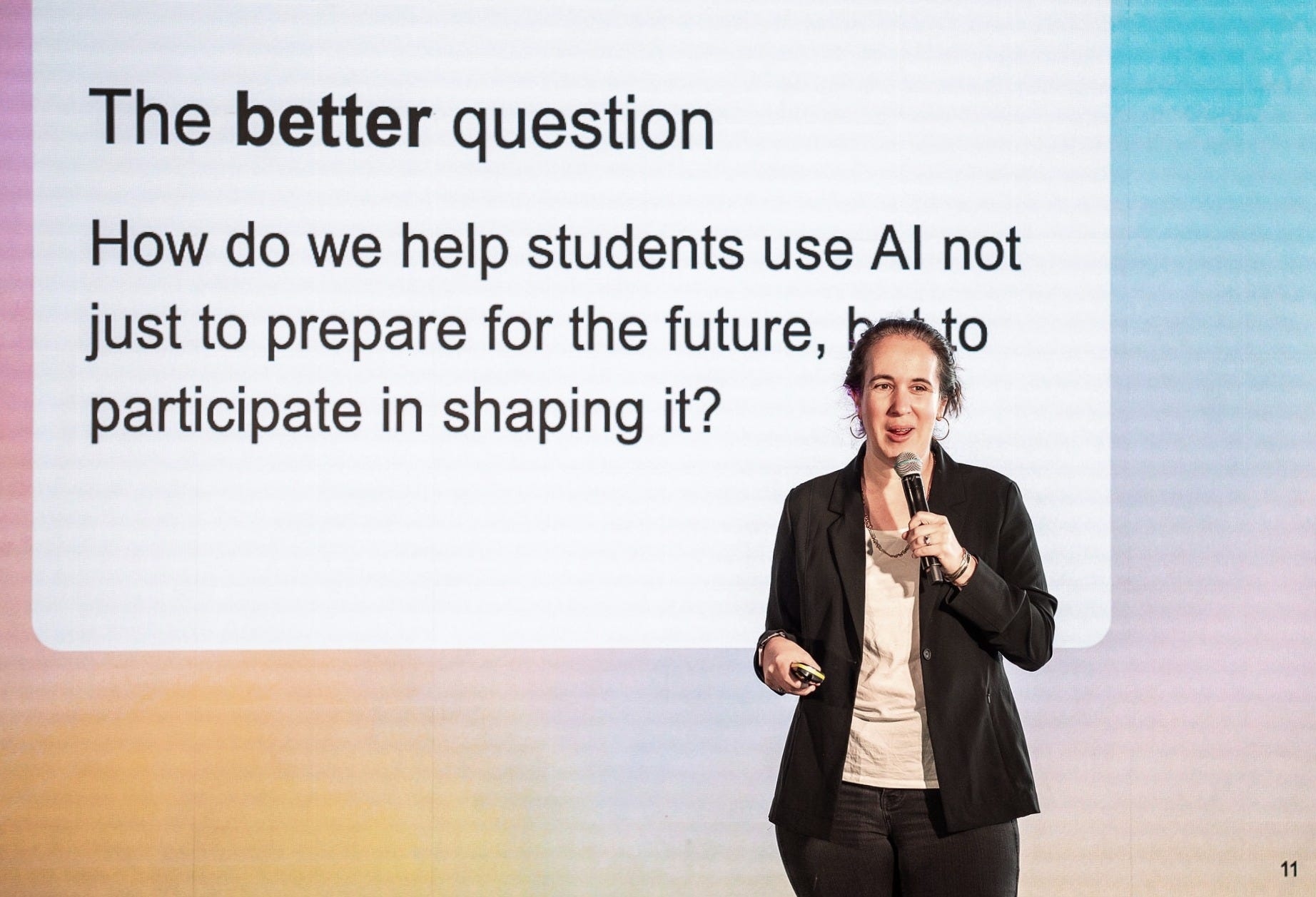
Leah Belsky, VP of Education at OpenAI, opened the event by asking how students can use AI not just to prepare for the future, but to shape it.
Intro
How do we prepare students for an increasingly AI-powered world? It’s a question many of us exploring.
But Leah Belsky, VP of Education at OpenAI, pushed the question a step further: How do we help students use AI not just to prepare for the future, but to shape it?
That idea set the tone for the Presidential Education Hackathon in Estonia, an event that brought together students, educators, researchers, developers, government leaders, and partners to turn national AI ambition into practical building.
The weekend highlighted an essential insight: AI literacy isn’t just about learning what these tools can do. It’s about giving students and educators the tools, guidance, and confidence to build with them.
Why Estonia
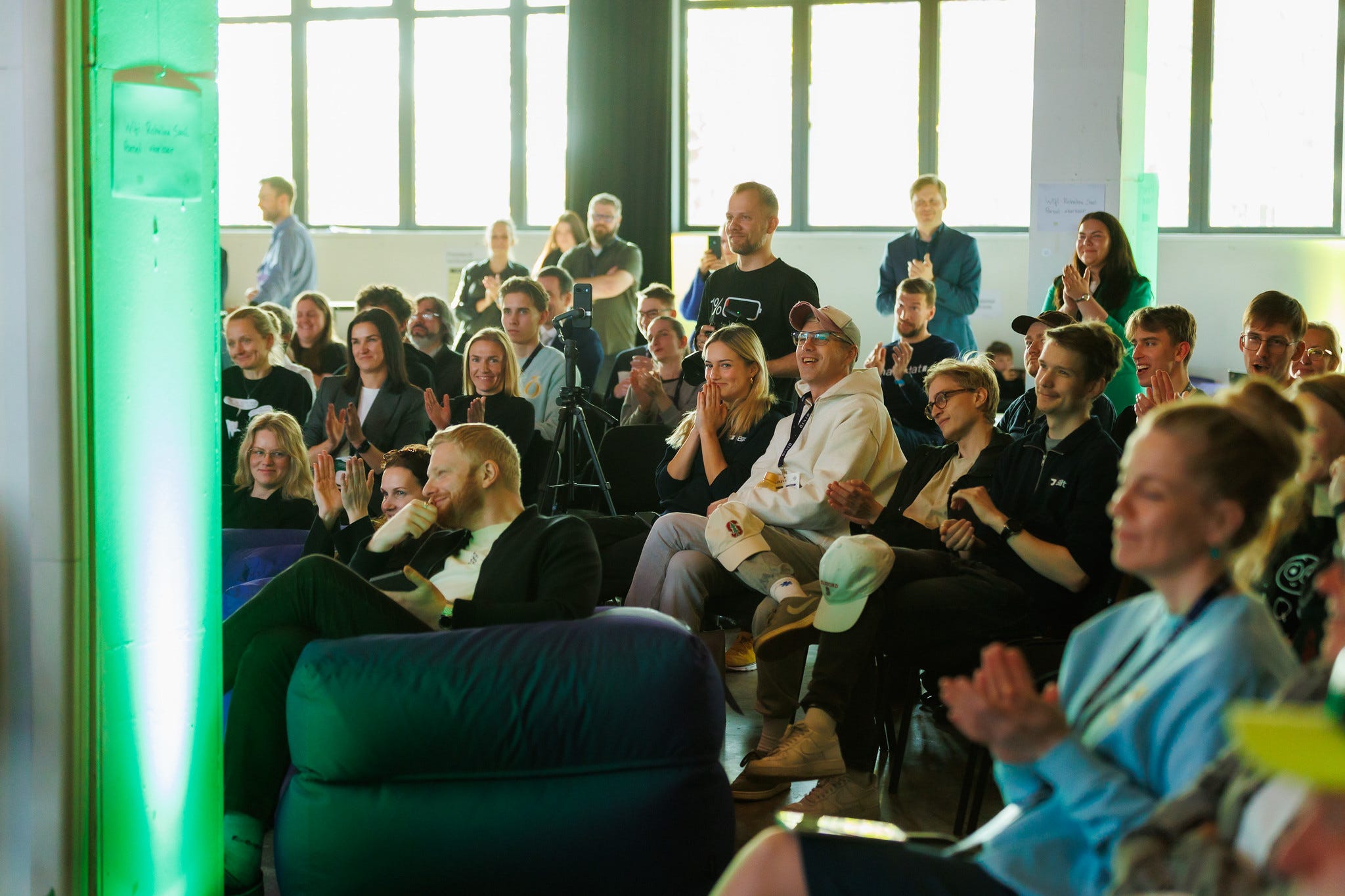
Participants at the Presidential Hackathon listening to opening remarks.
Estonia has become one of the most important countries to watch in AI and education. It’s truly a “lighthouse” for what AI integration looks like across an entire education system: a country moving quickly, but also studying what works. Notably they have the only high school deployment in the world with an educational version of ChatGPT with prompts customized to Estonia teaching and culture. Through AI Leap, Estonia and OpenAI are studying learning outcomes at national scale, including a 12-month randomized trial involving roughly 20,000 upper-secondary students.
At this stage in the intelligence age, access alone is not enough. Education systems also need evidence on how AI affects learning, confidence and opportunity over time.
OpenAI’s work with Estonia now reaches more than 30,000 students, educators, and researchers across more than 150 schools and six universities, alongside a major research collaboration with the University of Tartu and Stanford.
The hackathon made that national effort concrete. Instead of treating AI literacy as a lecture topic, it invited teams to build.
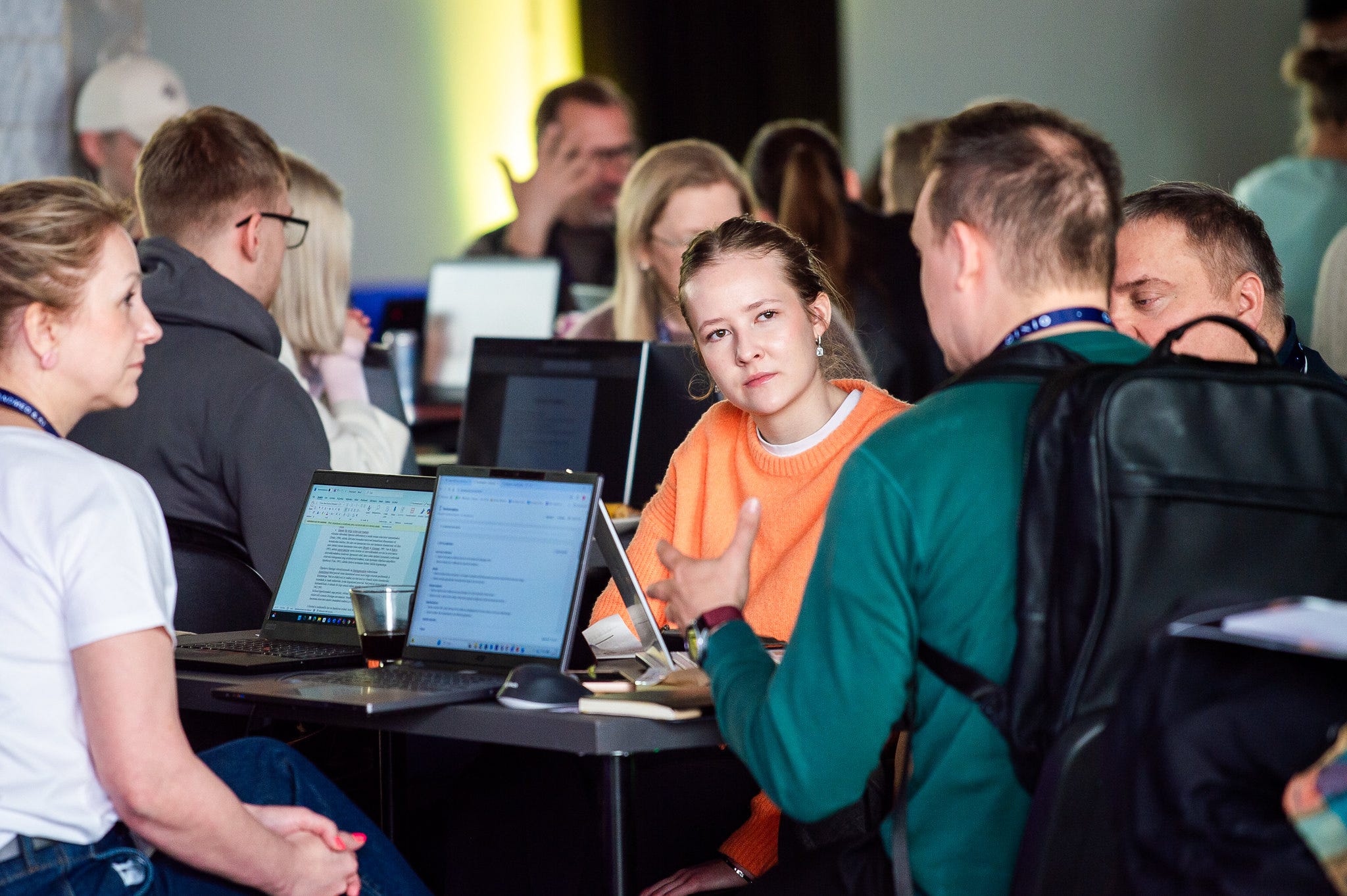
Hackathon teams moved from ideas to prototypes with support from mentors and AI tools.
From Learning to Doing
AI is narrowing the distance between learning and doing. Students no longer need to wait until after they have mastered every technical layer to begin experimenting and creating. With the right guidance, they can learn by building.
That changes what AI literacy means.
AI can help students ask better questions, learn faster, build prototypes, analyze complex problems, and contribute to real work earlier than ever before. But Leah also framed this as an equity challenge: students who learn to use these tools deeply may gain dramatically more capability, while students who do not may be left further behind.
The Hackathon
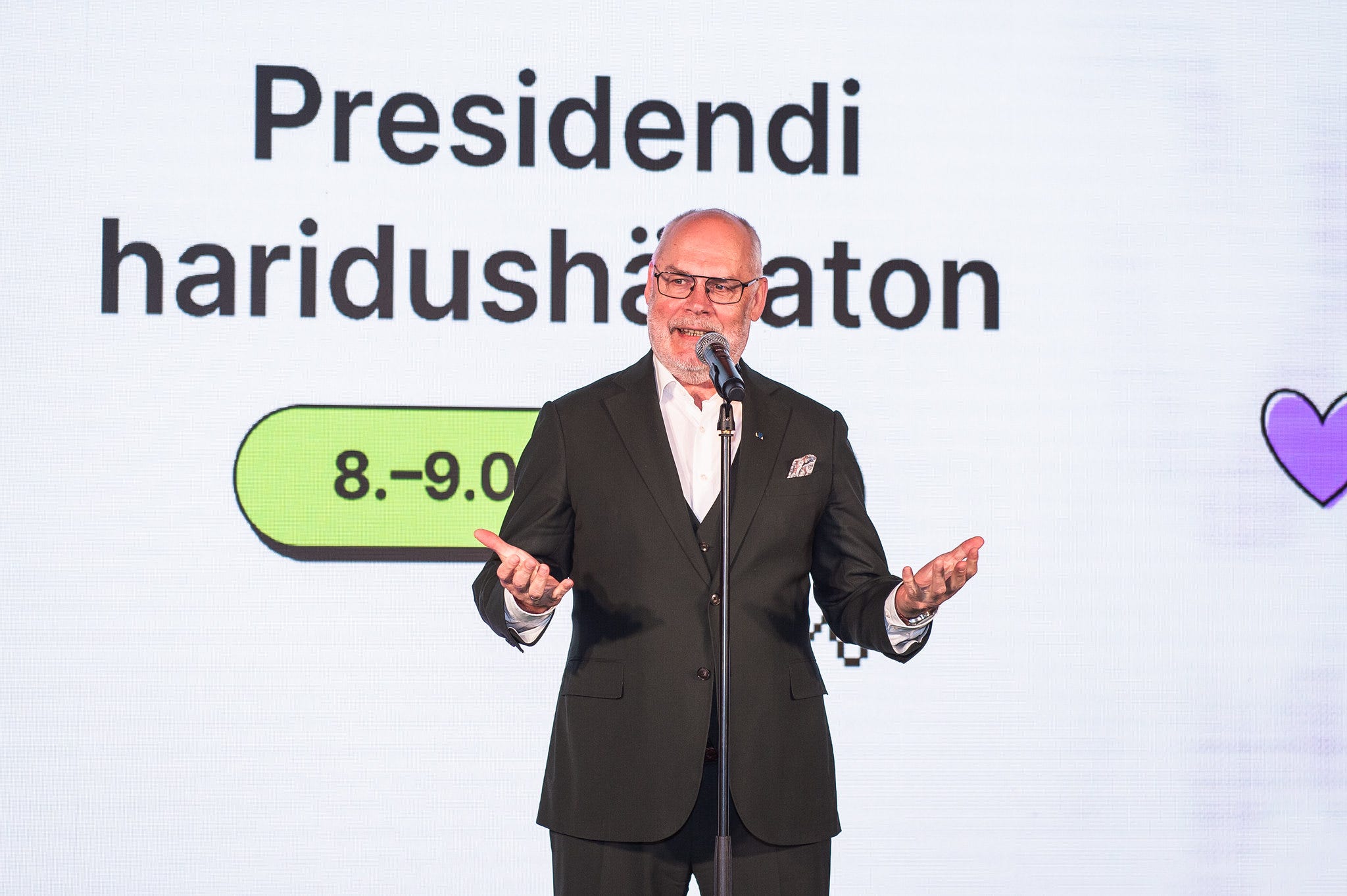
President of Estonia Alar Karis kicking off the Presidential Hackathon.
After opening remarks and introductions to the day’s tracks and problems, we moved on to idea pitches and some logistical guidance.
Teams worked across education challenges, including teacher and student use cases, system-level ideas, and math-focused learning. They used ChatGPT and Codex, OpenAI’s coding agent, to move from ideas to building solutions.
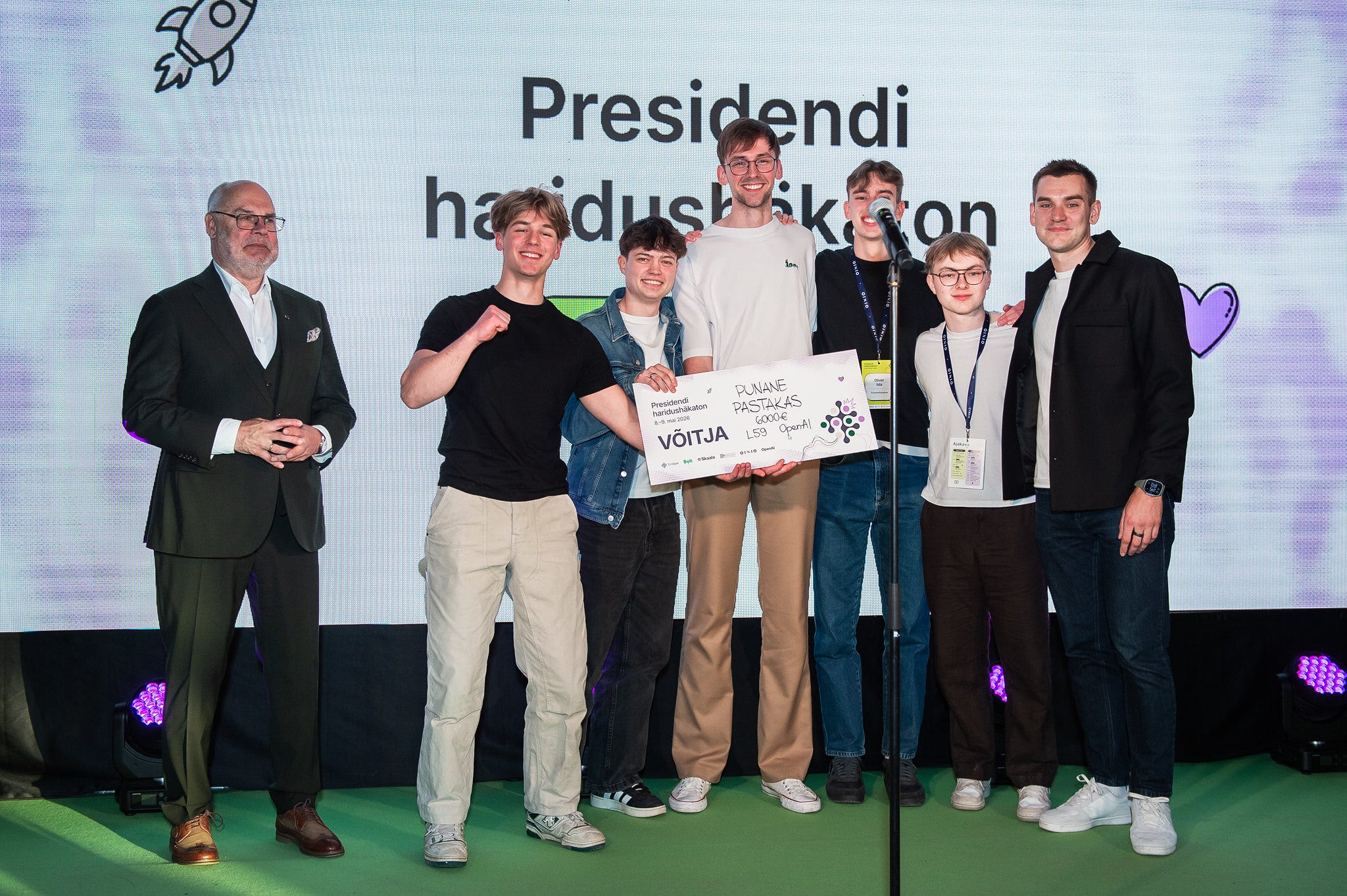
One winning team, led by Elias Teikari with Ekke Henk, Andrius Matšenas, Karl Elmar Vikat, and Oliver Iida, focused on a problem every education system recognizes: grading workload. After asking a teacher how much time she spent grading each year, the team heard a number that shaped the build: 378 hours. Their goal was to bring that below 100.
Their insight was pragmatic. Teachers already use tablets and styluses, so the team kept that workflow and used AI to take over the repetitive parts. A master agent orchestrated smaller agents: one reviewer checked the work against high school math materials, while another looked for slips, re-solved using the student’s number, and checked whether the reasoning stayed consistent.
That is the kind of prototype the hackathon was designed to surface: not AI as a replacement for teachers, but AI as a way to give teachers time back while preserving teacher review.
Other teams landed on similar pressure points. Multiple finalist teams independently targeted grading, feedback, and materials creation. Half the finalist pitches had a working teacher or principal as a primary voice on stage. The takeaway: teachers are one of the most underused product teams in education.
The same pattern is showing up outside Estonia. OpenAI’s Carlotta Reviglio reflected on her broader observations in Europe—during one school visit she met high school teachers using Codex to build an app for short educational “video pills” before class, so in-person time could shift toward discussion, critical thinking, and collaboration. She also pointed to student builders using GPT-5 models to help peers navigate university life and learning challenges, from finding housing in Milan to solving complex equations.
These examples point to the same broader movement: students and educators are using AI to test what might work rather than waiting for perfect answers before they build.
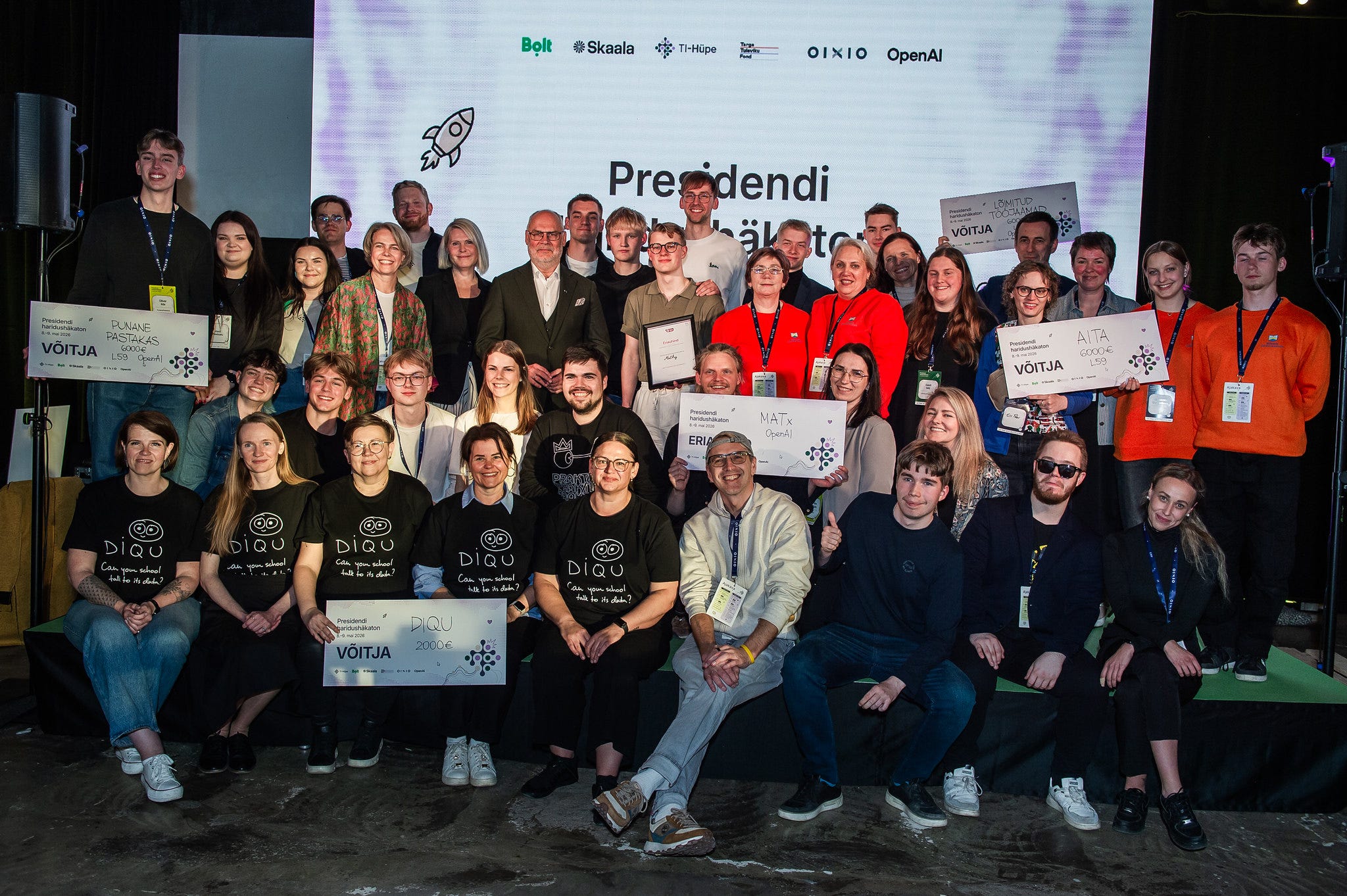
Winning teams will receive OpenAI API credits so they can continue refining, testing, and scaling their work after the event.
A National Signal
Estonia is not alone in thinking seriously about how AI will shape education. Countries around the world are exploring how to deploy these tools in ways that genuinely improve learning outcomes.
But Estonia offers an important example of how to approach adoption thoughtfully and at scale.
The lesson is not just about access to tools. It is about connecting access with research, policy, teacher support, and structured opportunities for students to create.
That combination is what made the hackathon feel different. It was not a standalone event. It was part of a broader national effort to help students and educators build practical capability in the age of AI.
The AI Leap team has been instrumental in their partnership and leadership throughout this work. And Estonia continues to show what is possible when governments, educators, researchers, and technology partners work together to expand access to learning and opportunity.
What Stands Out
Core idea: AI literacy is becoming less about passive tool use and more about students learning to build, test, and shape real solutions.
Classroom design: The hackathon model turns AI education into applied problem-solving across teaching, learning, systems, and math.
Student impact: Students are positioned as creators, not just users, of AI-enabled learning tools and ideas.
Teacher impact: Several teams focused on teacher workload, especially grading, feedback, and materials creation, showing where AI can help return time to educators.
Transferable lesson: National AI education efforts need both access and practice. Students and educators need tools, but they also need structured opportunities to build with them.
Closing
The Presidential Education Hackathon shows what AI in education can look like when national ambition meets practical creation.
Rather than asking whether students are ready for an AI-powered future, we should ask whether they have the tools, guidance, and opportunities to help shape it.
In Estonia, that future is already being built.
Learn more about OpenAI’s work with Estonia: https://openai.com/index/estonia-schools-and-chatgpt/
This is exactly the shift that matters. Not debating whether AI belongs in education — but showing students how to build with it, right now, on real problems. The 378-hour correction burden alone makes the case better than any policy paper could. Estonia keeps raising the bar.