

Dr. Andy Gunawardena teaches AI, data science, machine learning, and data management at Rutgers University and co-chairs the Princeton NJ AI Hub.
Source note: This is an edited interview adapted from a narrated video submitted to OpenAI.
Intro
Large courses create a familiar teaching problem: the more students enroll, the harder it becomes to offer each student the context, practice, and timely support they need.
For Dr. Andy Gunawardena, a computer science professor at Rutgers University and co-chair of the Princeton NJ AI Hub, that challenge shows up in lecture halls with hundreds of students learning AI, data science, machine learning, and data management. His response has been to turn curated instructional video into something more active: a course-specific AI learning companion called cuGPT, built to help students search, question, practice, and reflect inside the context of the material they are already studying.
The Interview
Q: You teach very large computer science and data science courses. What problem were you trying to solve?
Dr. Andy Gunawardena: I teach courses in AI and data science at the senior undergraduate level, often with total enrollment exceeding 500 students each semester. The specific courses are Data Management for Data Science and Introduction to Data Science with Machine Learning.
Lecture halls can be packed with over 250 students at a time. Scaling meaningful learning through traditional teaching is a challenge. That is why we turned to AI.
Q: Why focus on videos? A lot of AI education work starts with chatbots or tutoring systems.
Dr. Gunawardena: Data shows that 86% of students frequently look for instructional videos online. Curated videos from the instructor give students the power to take control of their learning in the context of the course.
Instead of being limited by the pace of a live lecture, they can pause, rewind, and revisit challenging concepts as many times as needed. As students move away from traditional textbooks, curated videos have become a default choice for extended learning.
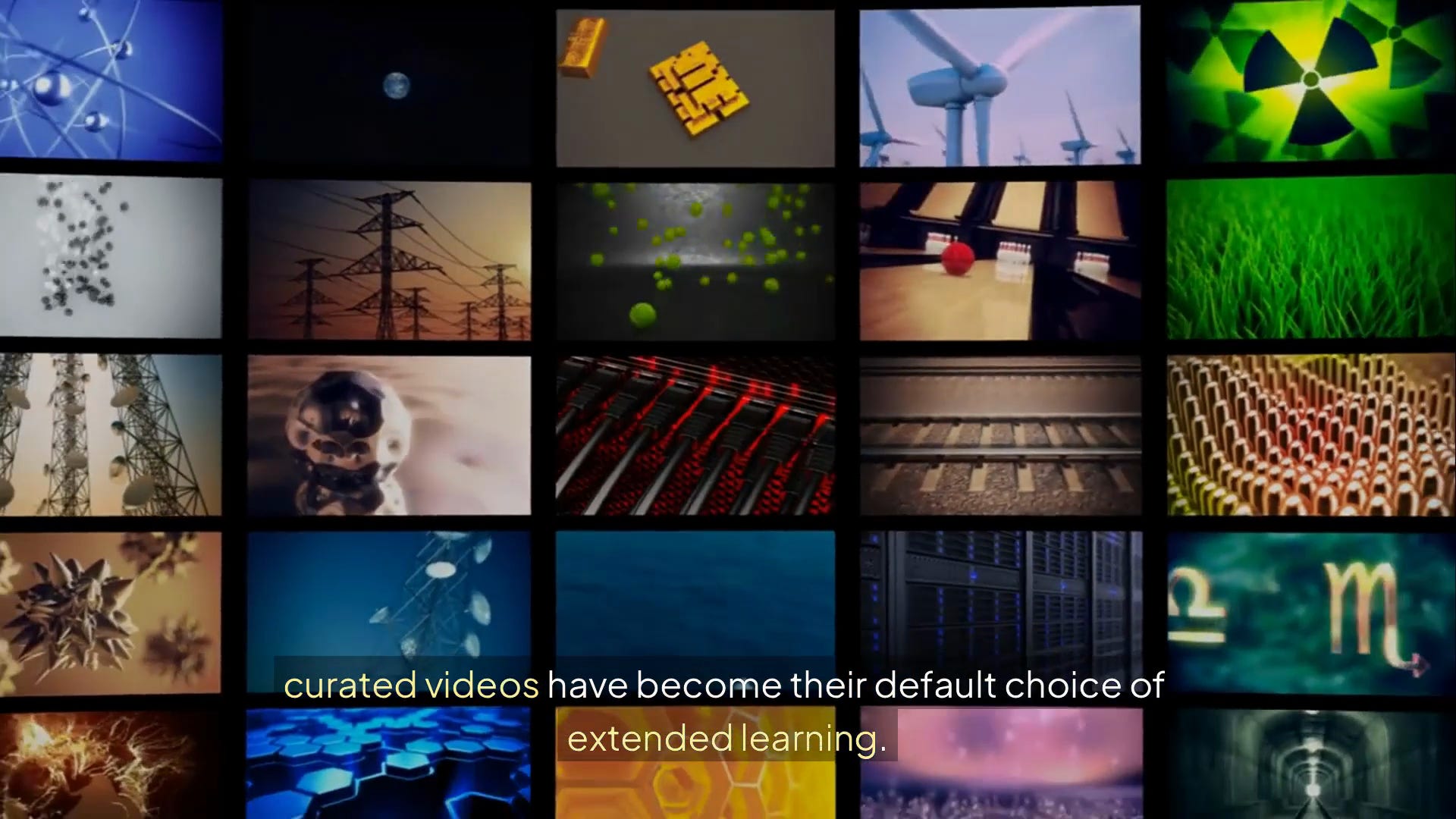
A course-specific curated video interface gives students a structured place to revisit lecture material, search within video content, and keep learning tied to the course context.
Q: So the idea is not just to give students more videos. It is to make the videos more useful.
Dr. Gunawardena: Exactly. Since 2022, we have been working with GPT to enhance the learning experience through curated videos by creating cuGPT, a customized AI assistant powered by ChatGPT.
Any instructor can build a custom curated video collection from a playlist using cubits.ai and enable transcription and deep search. Students can ask open-ended questions related to the video they are watching. That allows them to ask questions without having to establish the context from scratch. cuGPT already knows the context of the video, so it is able to answer the question well.
Q: What does that look like for a student in practice?
Dr. Gunawardena: After class, most students turn to the AI-assisted curated videos to dive deeper into the material, clear up confusion, and practice with interactive problems built right into the videos.
Students do not just watch. They actively engage. They explore concepts, ask thoughtful questions using cuGPT, and extend the discussion beyond what is covered in the video.
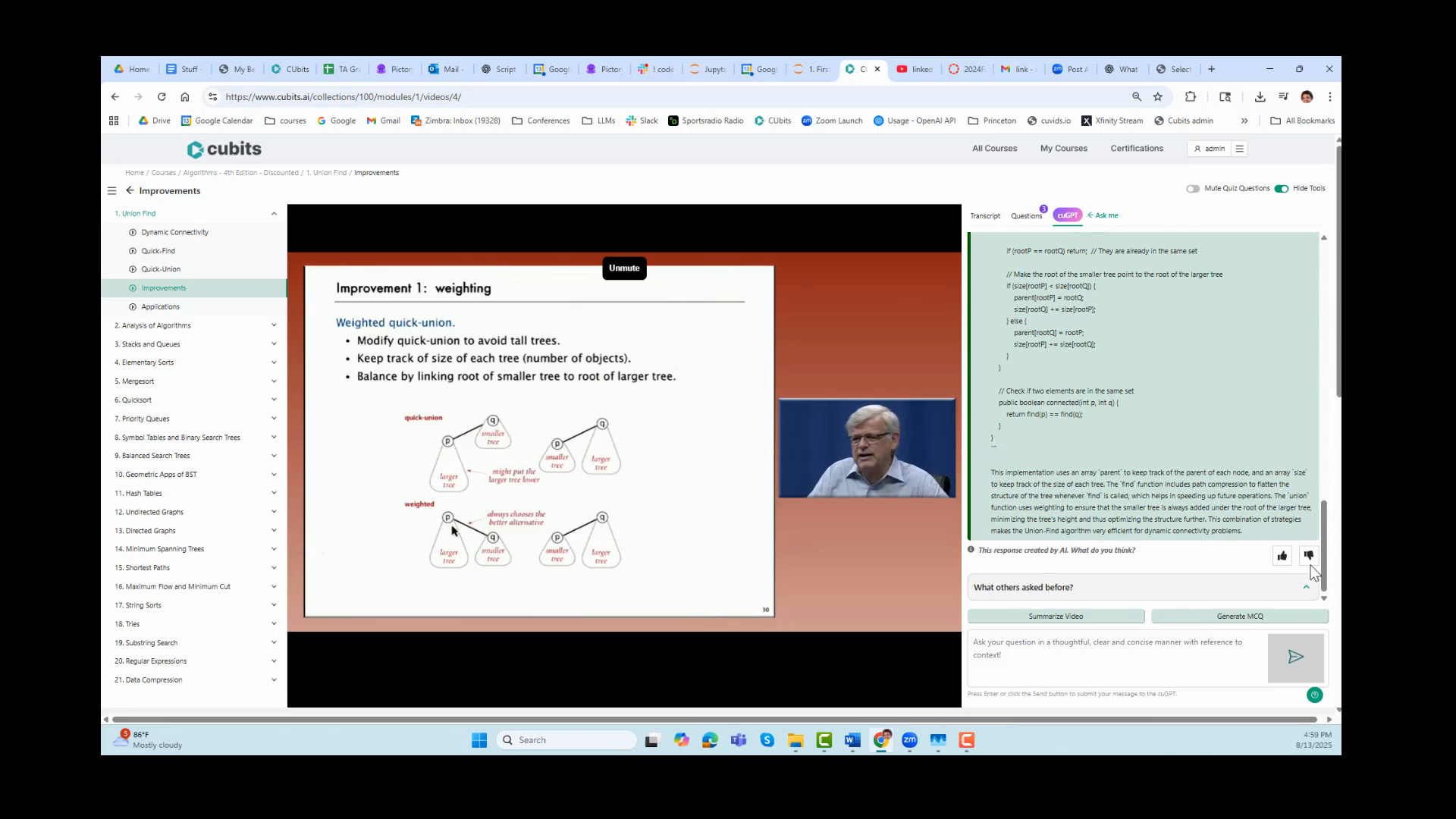
cuGPT helps turn instructional videos into interactive learning moments by letting students ask questions, practice with generated prompts, and receive feedback in context.
Q: One of the details I found interesting is that cuGPT helps generate questions too. How does that change the instructor workflow?
Dr. Gunawardena: To make it easier for an instructor to curate questions for each video, cuGPT can generate a first draft of multiple choice, select-all, or open-ended questions using GPT. Then the instructor can edit the questions to make sure they are accurate and improve them further.
This saves a tremendous amount of time and gives students a way to actively engage with the videos. The data collected from the Cubits dashboard also helps instructors assign grades and extra credit.
Q: You’re not treating AI as automatically correct. You’re asking students to evaluate it.
Dr. Gunawardena: We believe students should learn how to critically evaluate AI responses. Therefore, we provide tools for students to give feedback on AI responses. We use that data for research to see how well AI responds to questions.
One of the other benefits of course-specific AI is that students get to see what other students are asking and learn from them. The questions generated by students allow researchers to learn more about where we can improve.
Q: What early evidence tells you this is working?
Dr. Gunawardena: Based on surveys of thousands of students who have used curated videos powered by cuGPT since 2022, students report that they find the videos to be the number one or number two most helpful learning resource in the course.
Our research publications in ACM journals show a positive correlation between students who actively use cuGPT and higher course grades. Deeper studies are underway to learn the true impact of AI-assisted learning.
Q: What is the broader theory behind the work?
Dr. Gunawardena: My research group studies the use of AI in education for increasing accessibility and scalability. The goal is to help instructors support large numbers of students while still giving students more context, more practice, and more chances to ask questions.
The course-specific nature matters. Students are not asking a general chatbot in isolation. They are interacting with an assistant that understands the video and the course context.
Q: If another instructor wanted to try this, what would they need?
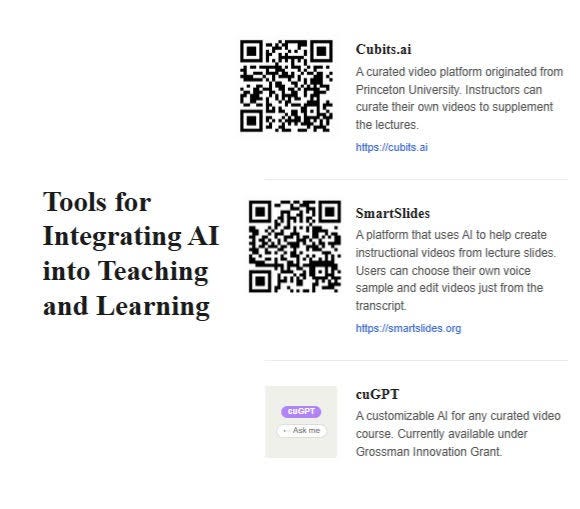
Dr. Gunawardena: The cuGPT and cubits.ai platforms developed at Princeton are freely available to any instructor for any course. Instructors can create course-specific videos using any platform, including Smart Slides, which allows instructors to create cuGPT-specific lecture videos from their lecture slides.
What Stands Out
Scale: Courses can exceed 500 students per semester.
Student behavior: 86% of students frequently look for instructional videos online.
Learning design: Videos become searchable, question-driven, and connected to course context.
Instructor workflow: cuGPT drafts multiple choice, select-all, and open-ended questions for instructor review.
Early evidence: Surveys report cuGPT-powered videos as a top one or two learning resource.
Research signal: ACM publications show a positive correlation between active cuGPT use and higher course grades.
Bio
Dr. A.D. (Andy) Gunawardena has served as a Professor of Computer Science at multiple institutions including Carnegie Mellon, Princeton and Rutgers Universities over 20 years. He leads data science and AI in education efforts and is the Co-Chair the Princeton NJ AI-Hub Education and Workforce Development initiative.